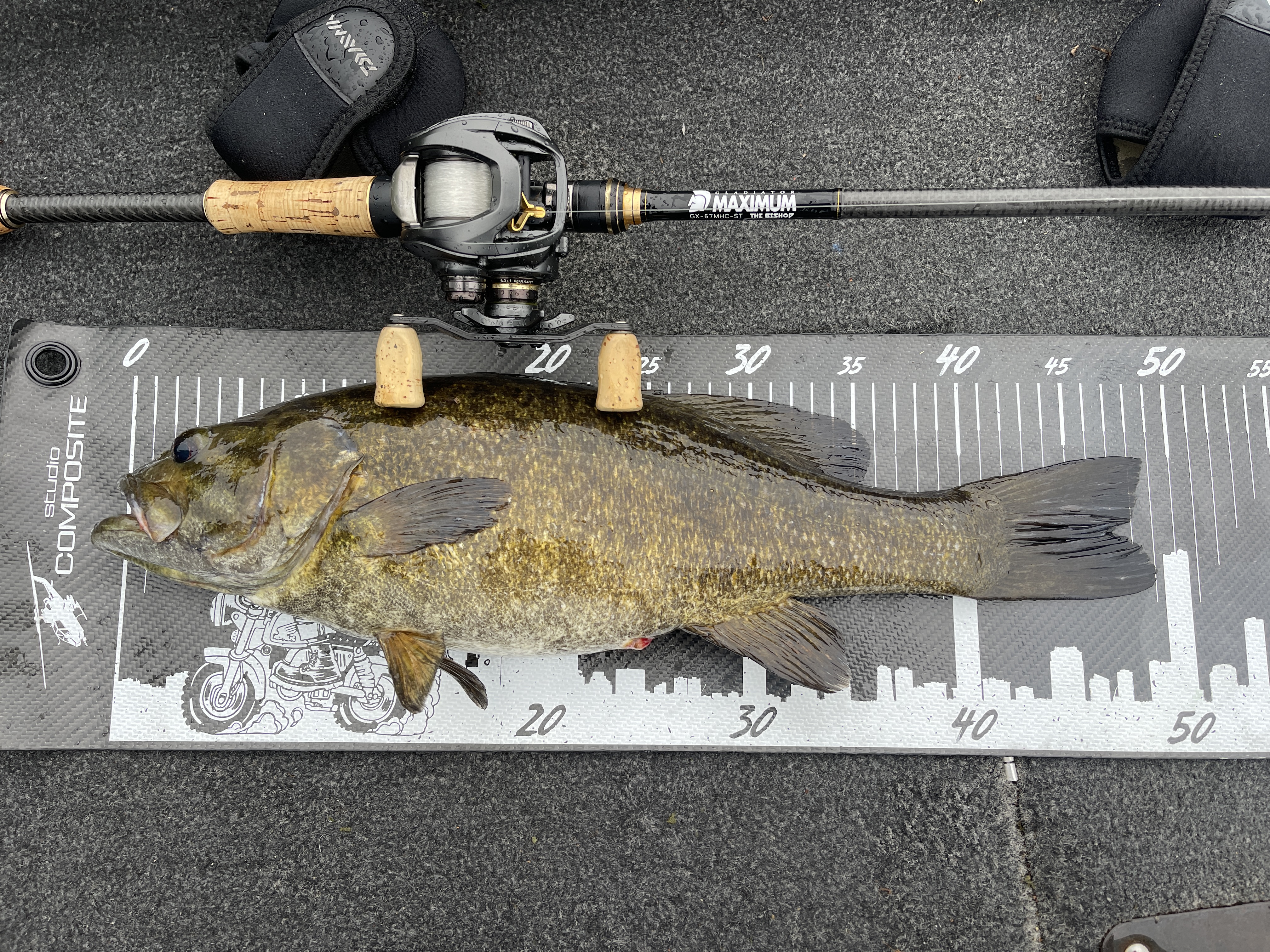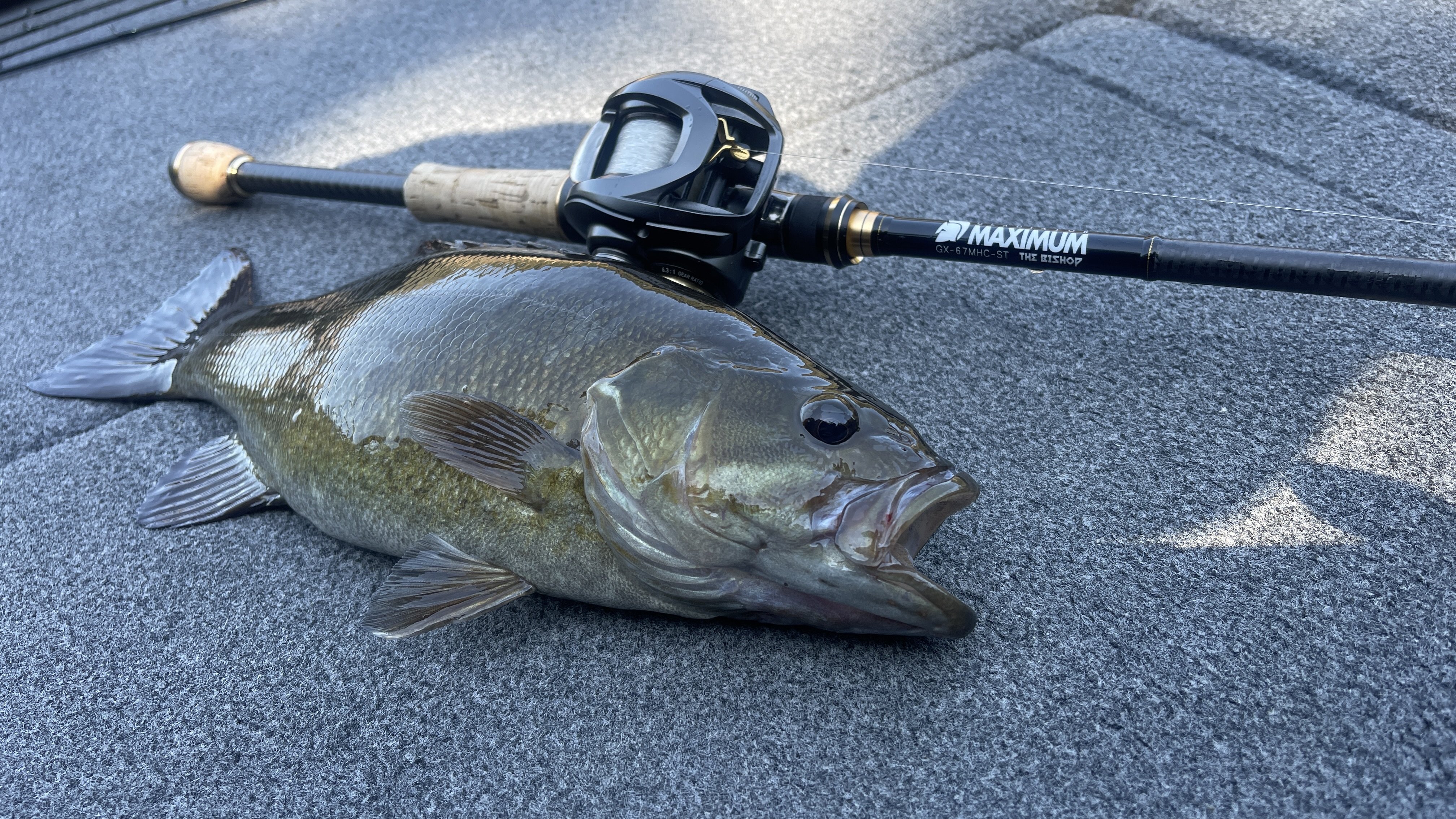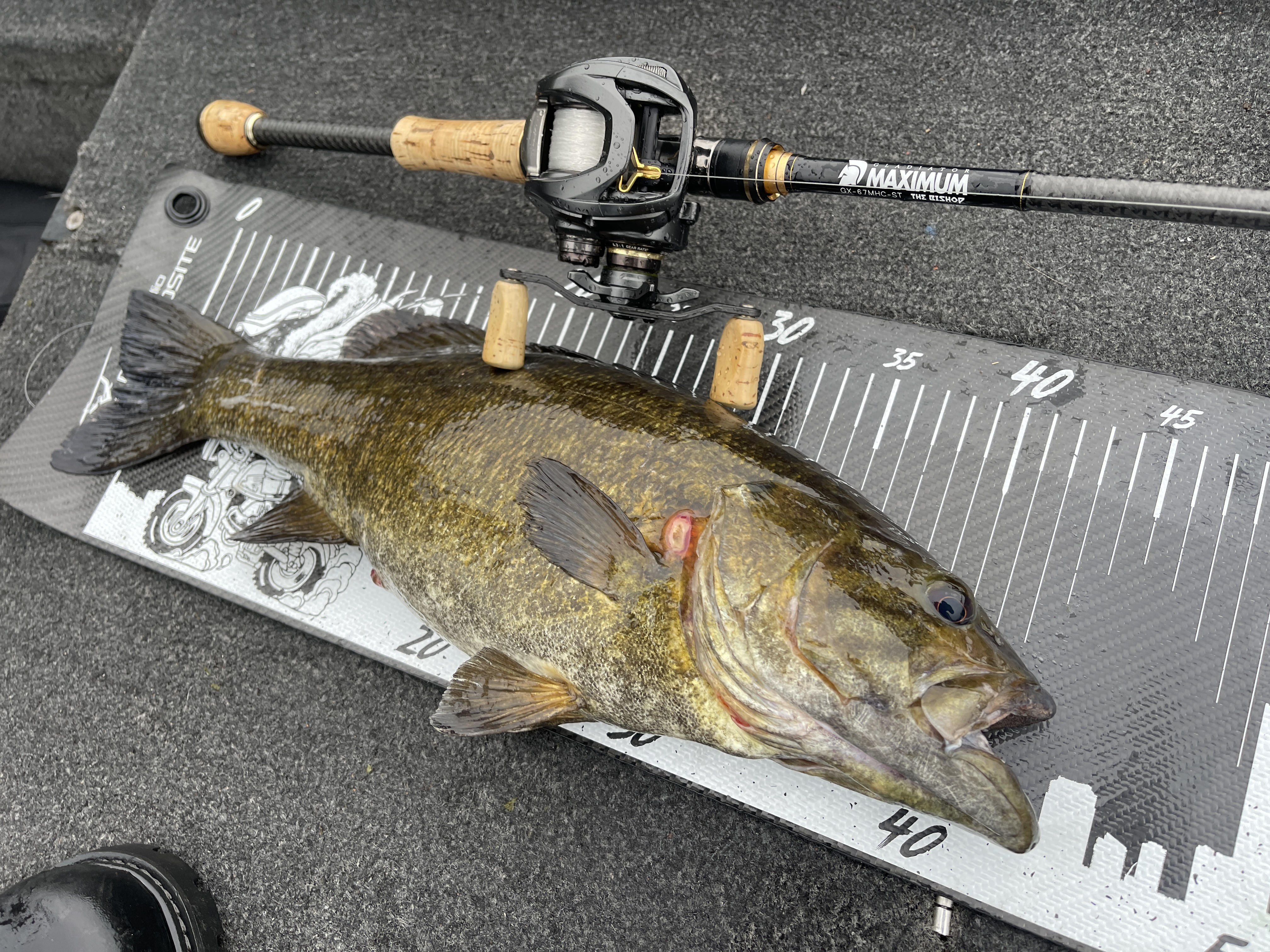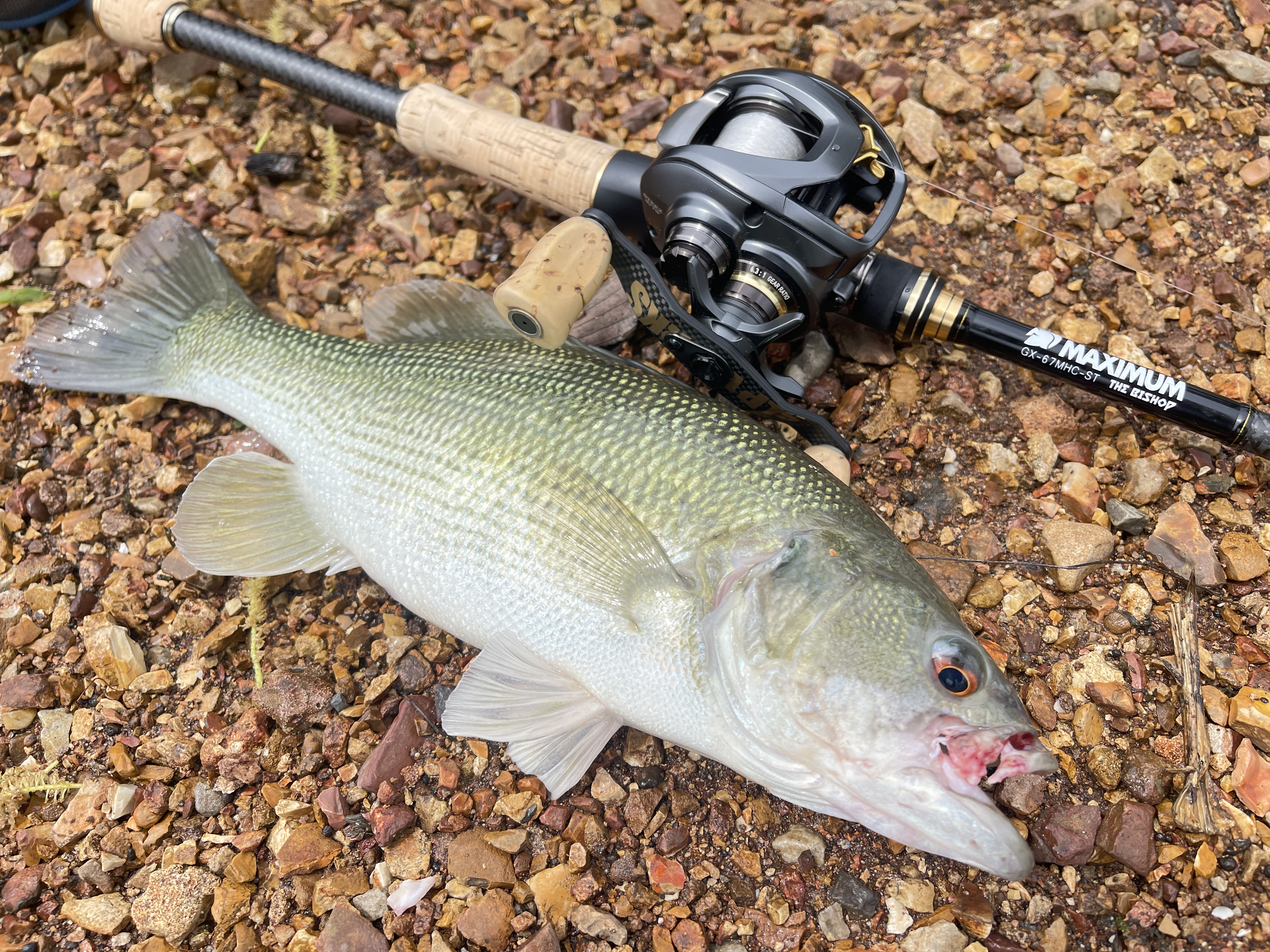
Not a Pawn…RAID Japan’s “The Bishop”

Preface:
At JDMFishing.com, we don’t believe in weekend fling reviews written after two hours, days, weeks or even months on the water. Our mission has always been to deliver thorough, deep, technically sound, and experience-rich reviews that go beyond box specs and Instagram hype. We fish with gear for seasons, not sessions. Our reviews are long-term—gritty, honest, born from thousands of casts, plenty of fish caught, missed bites and even heartbreaks that still haunt us at 3AM. We believe in long-term testing because we feel anything less is just reading specs off a website and calling it insight. We take all rods, reels, and tackle we review into battle. We fish them hard and put em away wet, with most gear often getting scarred, baked, and occasionally slammed into consoles, electronics, cowlings, etc. We may accidentally step on them, or even sit on them while eating gas station cookies and sandwiches. That said, when we finally write about a rod (or any given piece of gear) rest assured, it’s been put through its paces, tested by time, torque, and tantrums. If it’s still in our hands after a year-plus later, it’s either worth talking about—or we’ve developed Stockholm Syndrome. Just know…we take this seriously.
THE BREAKDOWN:
Manufacturer: RAID Japan
Name/Model: Maximum GX-67MHC-ST “The Bishop”
MSRP: 56,000 JPY
Origin: Japan (Blanks Made In China)
Blank Material: Carbon Composite/30 Ton Solid Tip Section
Length: 6’7″
Power: Medium-Heavy
Pieces: 1
Taper: Extra Fast (X-Fast)
Lure Rating: 3/16oz – 1/2oz
Line Rating: 8 – 16 lb
Rod Weight: 3.7 oz (105 Grams)
Handle Length(s):
Full Grip Length: 13-1/2″
Rear Grip Length: 9-1/8″
Reel Seat Hood To Butt: 12-1/2″
Front Of Trigger To Butt: 10″
Grip material: Main Grip: Cork
Butt Grip: Cork
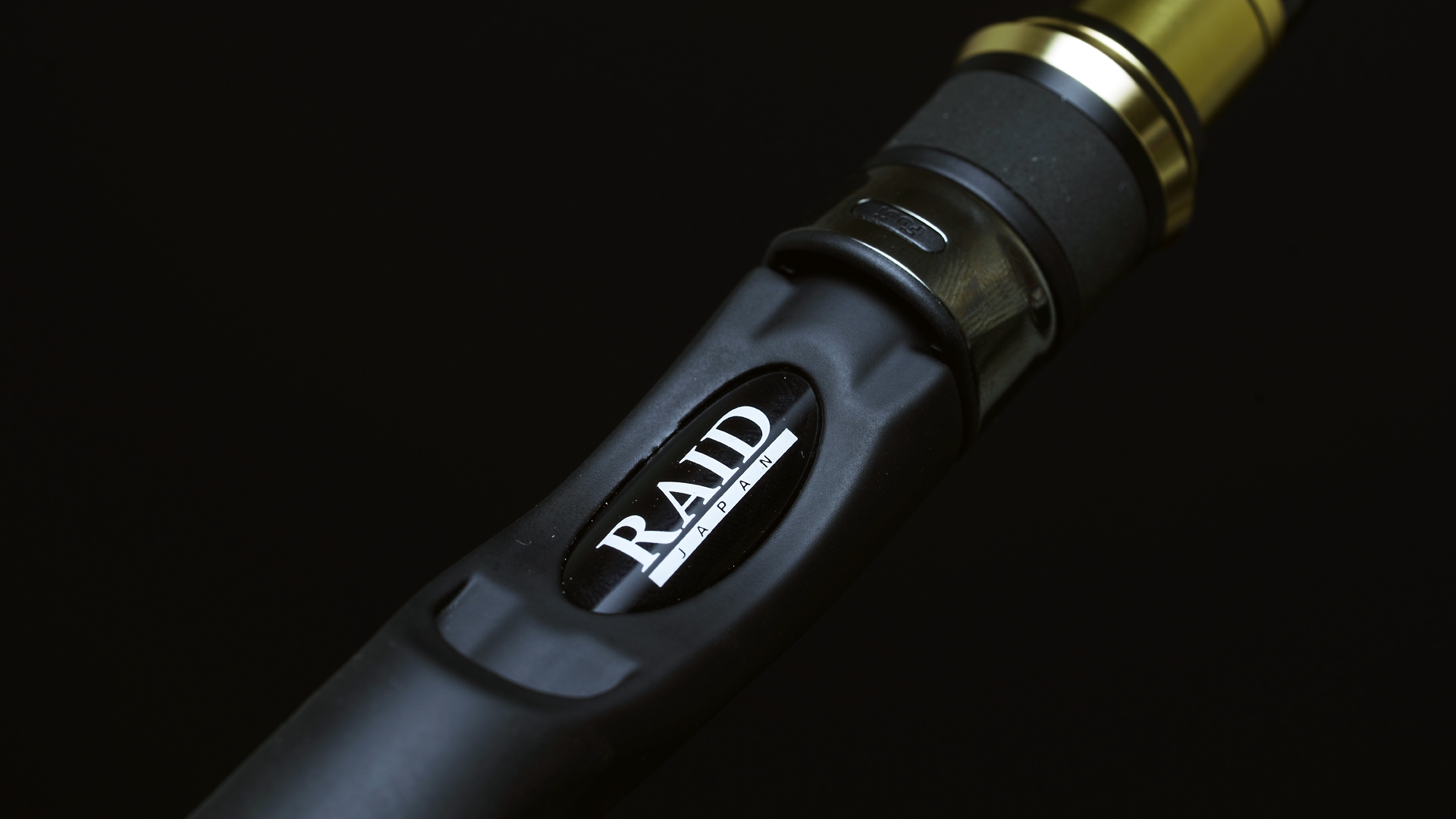
Reel Seat:RAID’s own iteration of the Fuji ECS
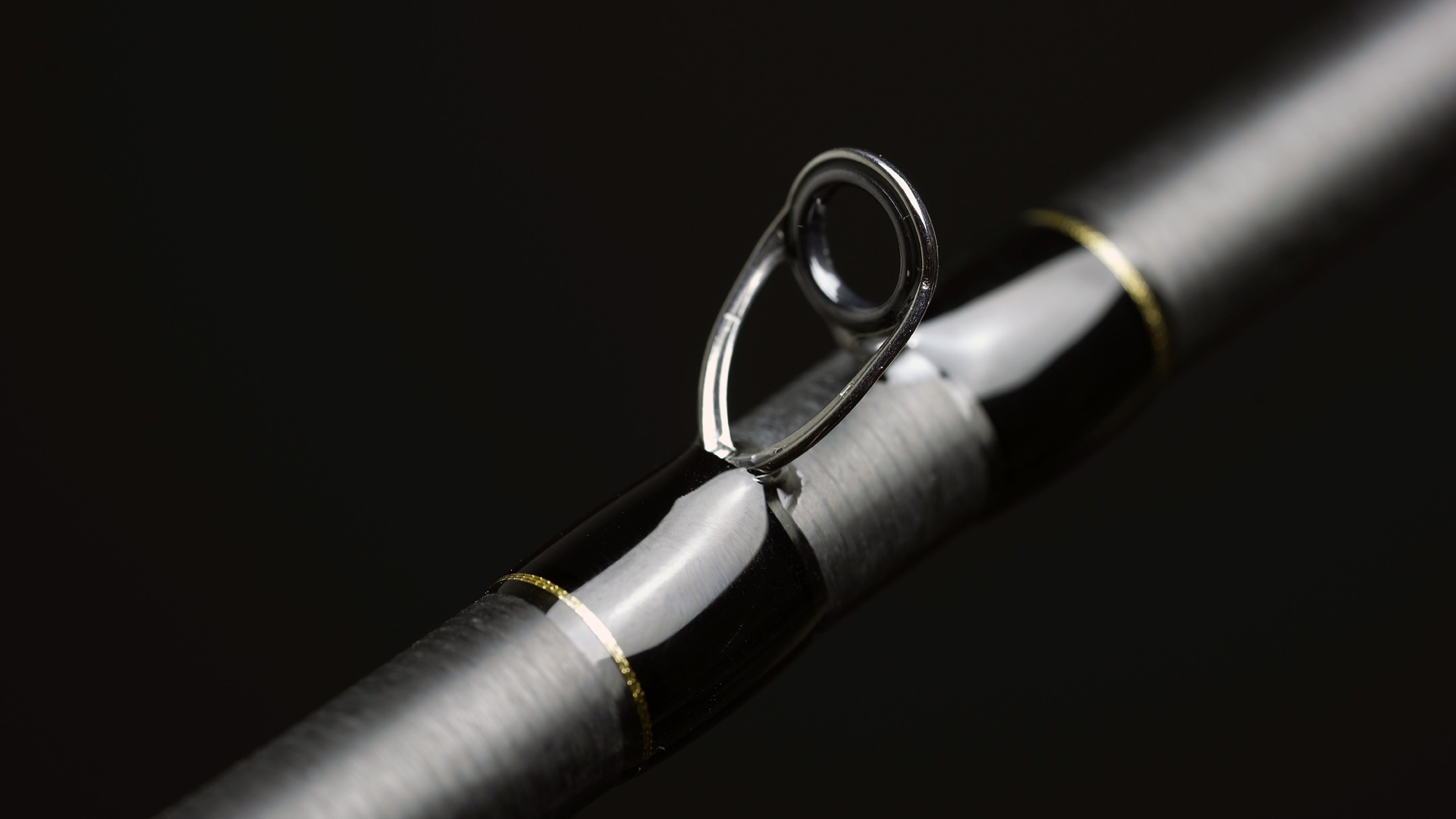
Guides: Fuji Torzite/SiC
Number Of Guides:11
Manufacturer Suggested Techniques: Heavy Drop Shot rigs, Free Rigs, light Texas, Light Backslide Worms, and Heavy Neko rigs.
JDMfishing.com’s suggested techniques: Texas, Gika, Tokyo, Heavy Drop Shots, Free Rigs, Heavy Neko
Sensitivity: 4.25/5
Balance: 4.75/5
Power: 4.5/5
INTRO
The RAID Japan “Maximum” series of rods were introduced back in 2020, and already being a long-time RAID fan – watching them move in a direction that was very appealing to me, I knew I’d have to get my hands on them for real-world testing. RAID took their time, only releasing a few models to start out with (The Bishop being one of them). Since then, they’ve steadily introduced more models and currently offer a pretty full lineup, with 4 of those models in my current stable.
First Impressions
After mulling over specs, available promo vids and press release material, I made the choice to grab The Bishop as my first taste of the Maxx series. I was anxious to get this new Gen model in hand, as I’ve been a fan of the Technix and Gladiator series. I had high hopes.
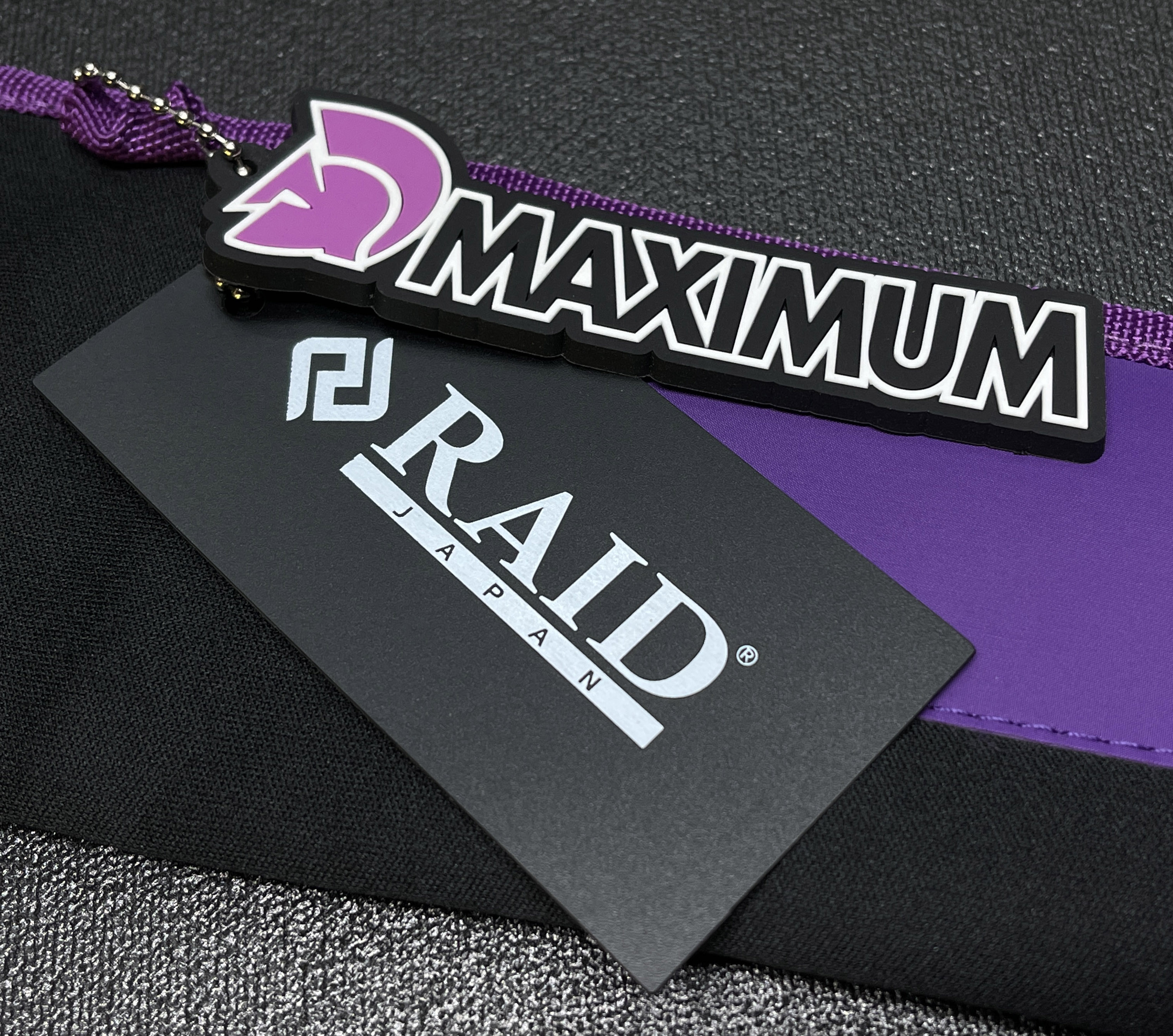
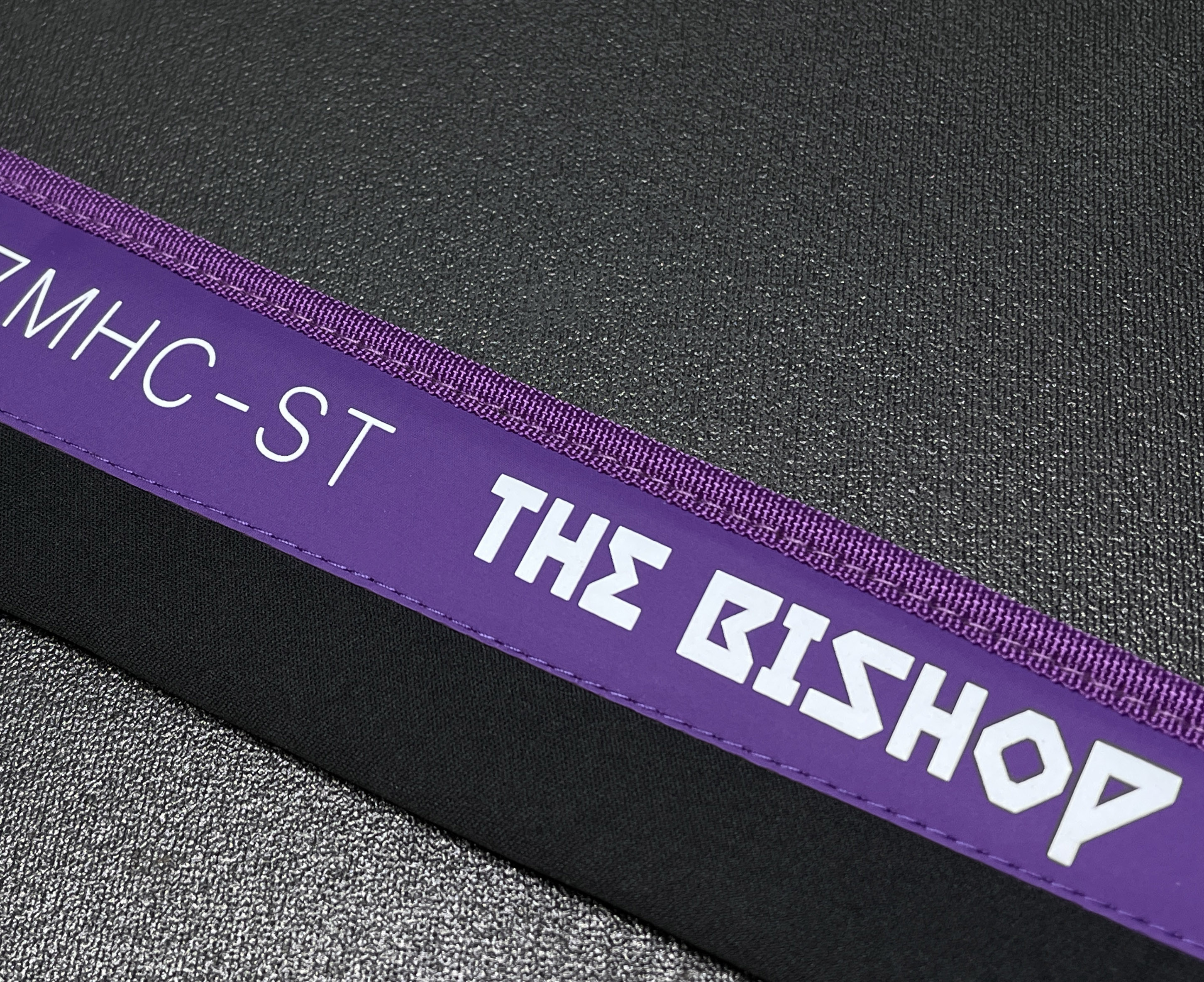
Upon arrival…I unpacked the rod, and first thing that grabbed my attention was the sleeve it came in. Yeah…not something I tend to dwell on very much these days, as I’ve seen more than I can count, but RAID did an outstanding job with this iteration and I was impressed. Heavily padded/built with some mass to it and the silicone badge on a chain is a nice touch. It’s the little things. After admiring the packaging, it was time to check out what this stick felt like in hand.
Aesthetics are clean, with a hint of “flash” and it’ll definitely help if you’re a fan of Gold. Bluntly put, the Maximum series offerings are not as attractive to me as the Technix series were. I was a big fan of the custom trim and embellishments used on that series, but overall, the color choices of the Maximums line up nicely.
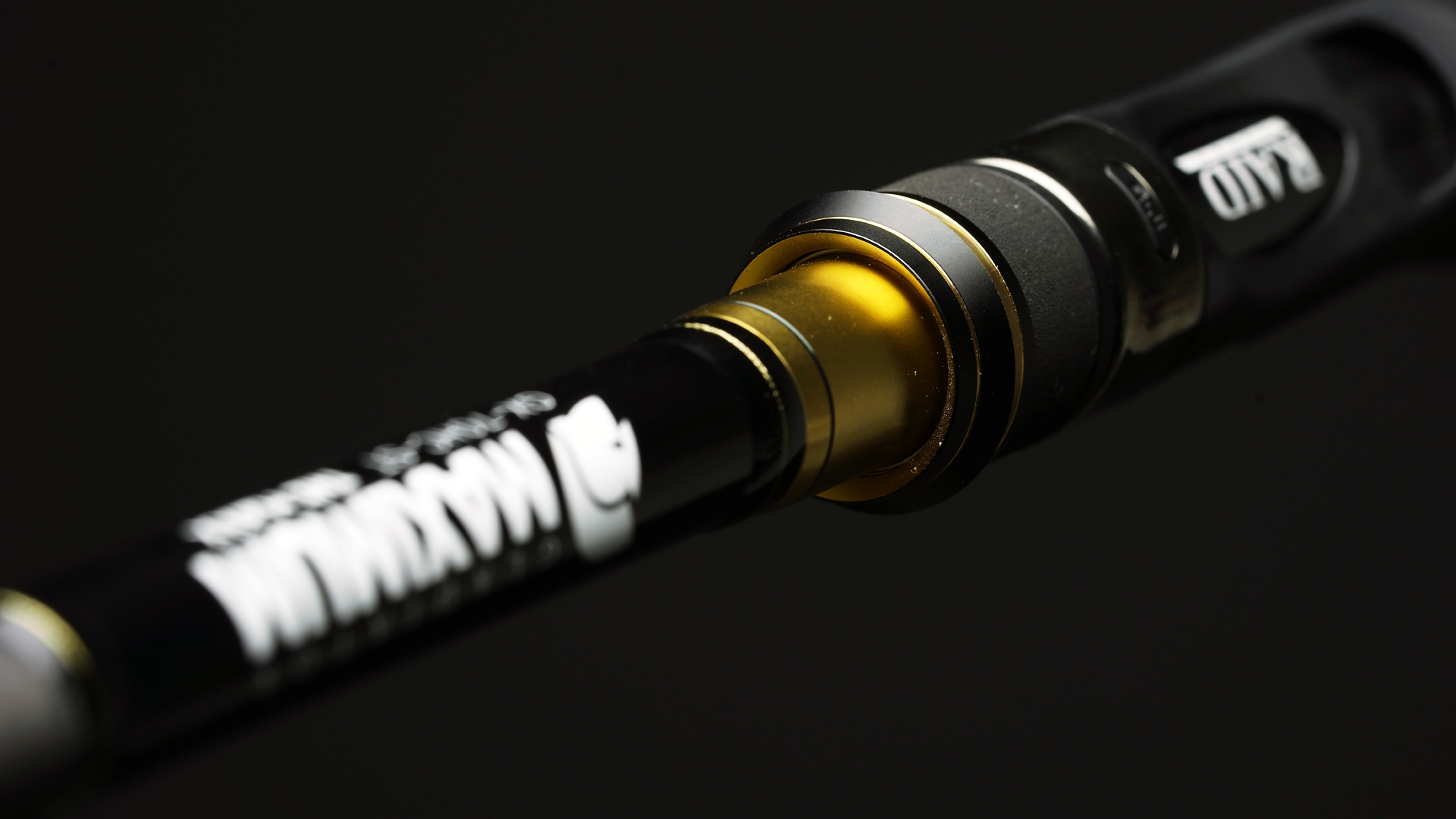
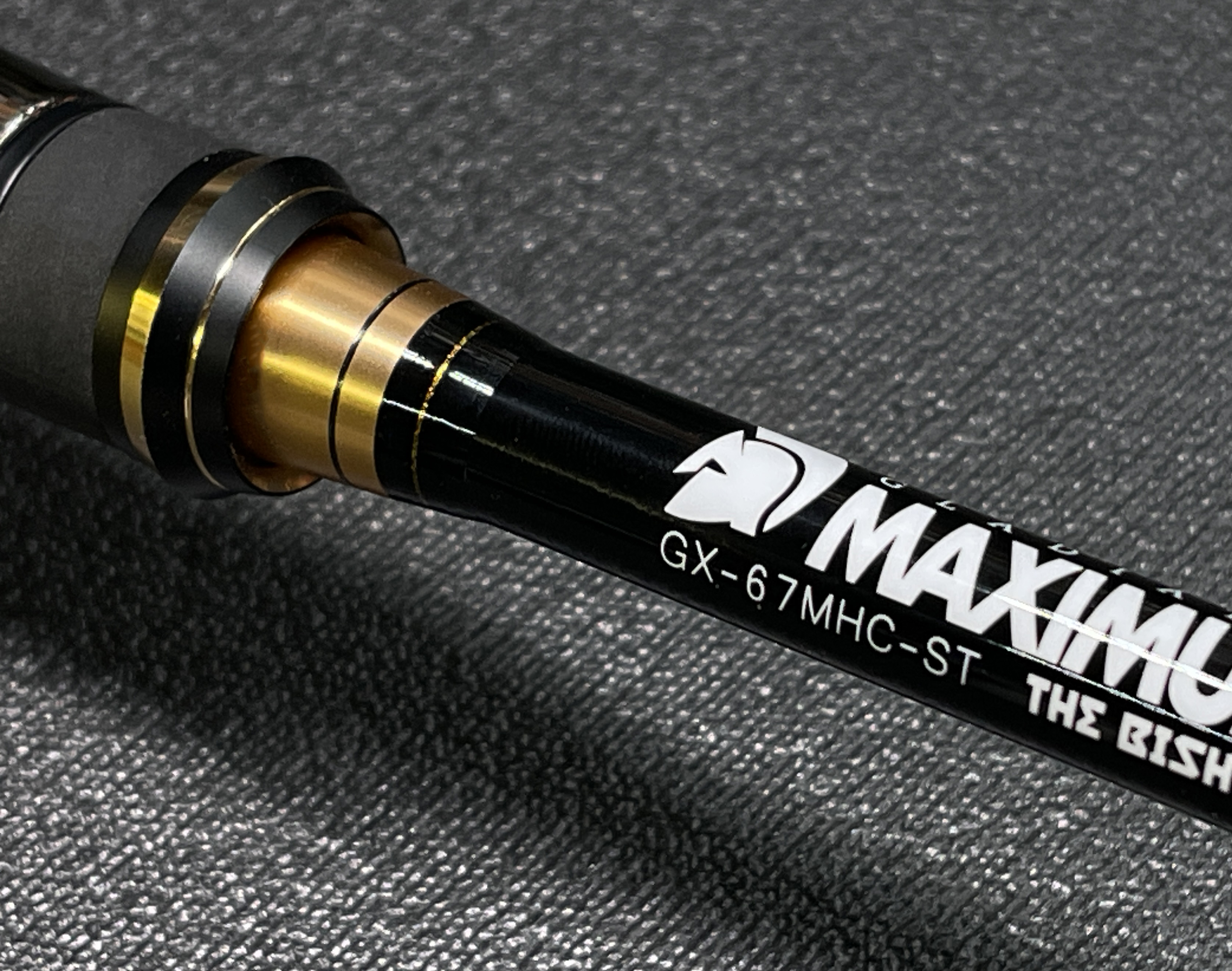
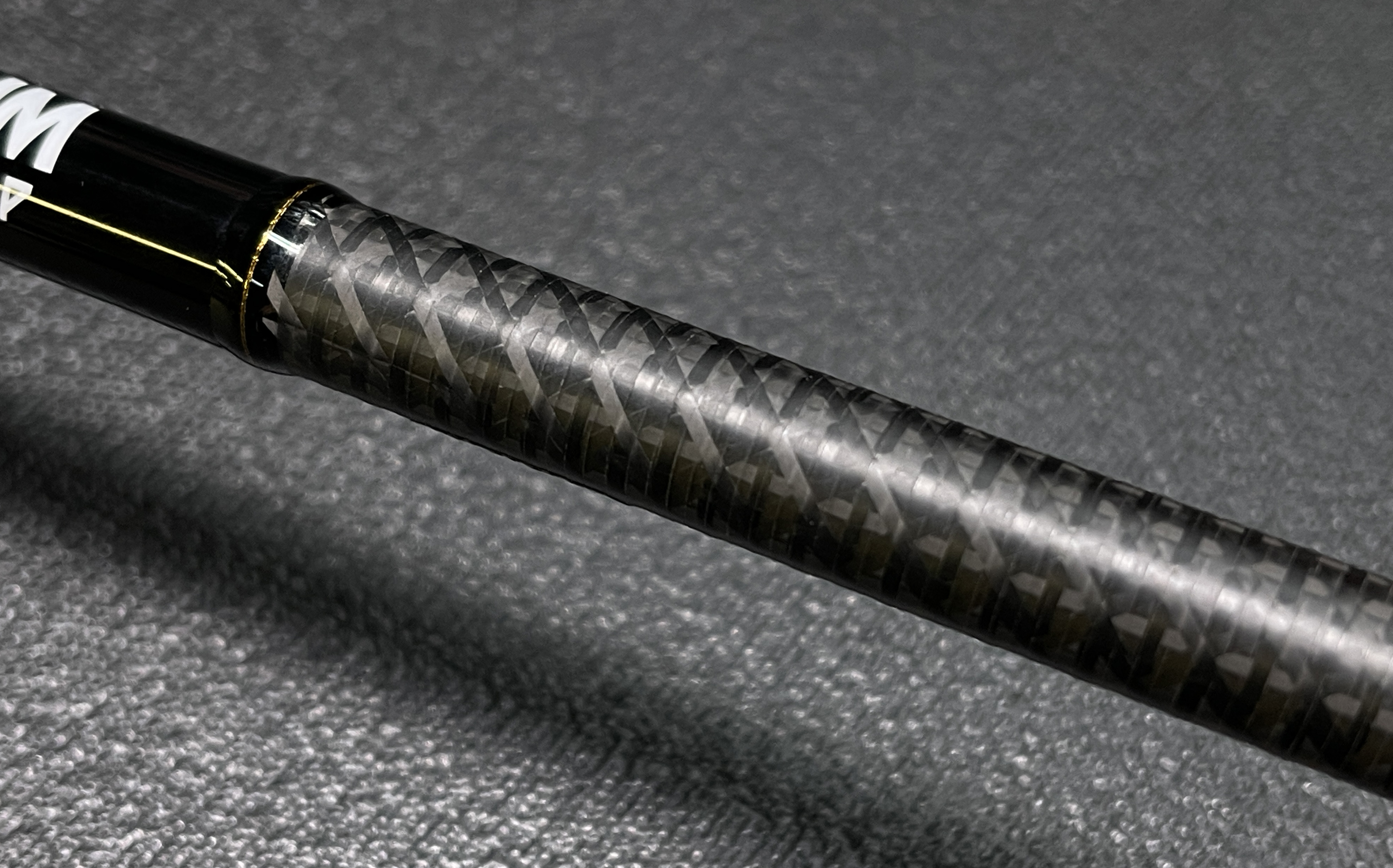
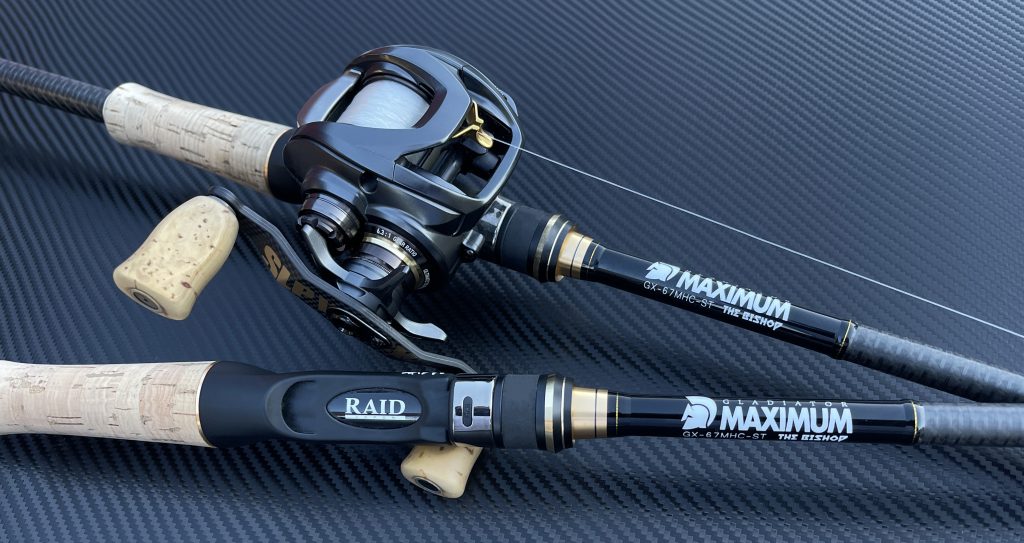
The first that jumped out…The Bishop opts for an un-sanded finish that features a multi-axis cross-woven section at the lowest part of the blank for some crucial and very effective reinforcement, adding to this stick’s backbone. The fore nut has a modern, sharp-edgy shape, reminiscent of the original Gladiator series’ stand-out custom winding check used throughout that lineup, but the sharper machined edge on this iteration makes its presence known if you’re someone that lays their finger in front of the reel while working your bait. I personally think it’s something worth noting as it might not be for everyone.
The rod’s main grip is cork and are shaped much like those of Evergreen International’s Inspirare/RS/IRSC series. Regardless, they are cleanly done. With that said, there’s a fair amount of filler that always seems to trigger me at this price point. It’s unfortunate that this has become the norm over the years, but here we are. Cork quality just seems to have moved in the wrong direction on many high end rods over the past decade. Rant done.
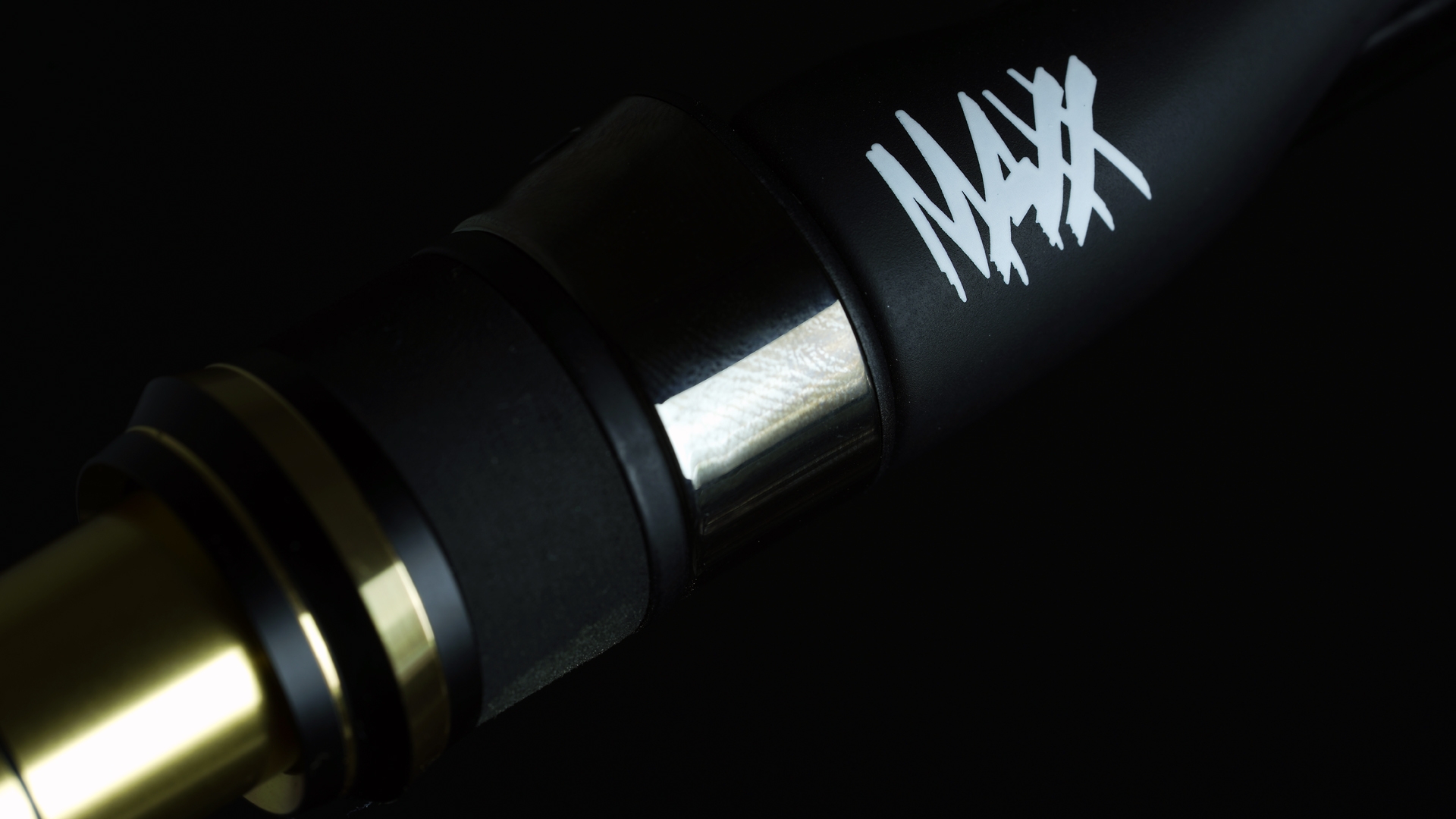
The reel seat?…RAID’s own version of Fuji’s ECS. Form-wise…very comfy, but with slight differences from Fuji’s legendary version. Aesthetically, I’ll nitpick for a sec on one of the things I’m not a fan of, which is the oversized, campy “MAXX” logo on the side of the seat. In my opinion, they definitely could’ve done without it or maybe have done it in a gloss black to subtly contrast the matte black seat. It stands out like a sore thumb and in my opinion, cheapens the overall aura of the rods. Eyesore in my opinion, yes, but not a deal-breaker. On a positive note, the small rear grip is shaped from cork and that’s a nice touch, especially when so many manufacturers these days opt for EVA in this area. Guide train is Torzite /Fuji Ti SiC and all Maximum series builds I’ve gotten my hands on have sported tidy thread-work, with everything being on point alignment-wise.
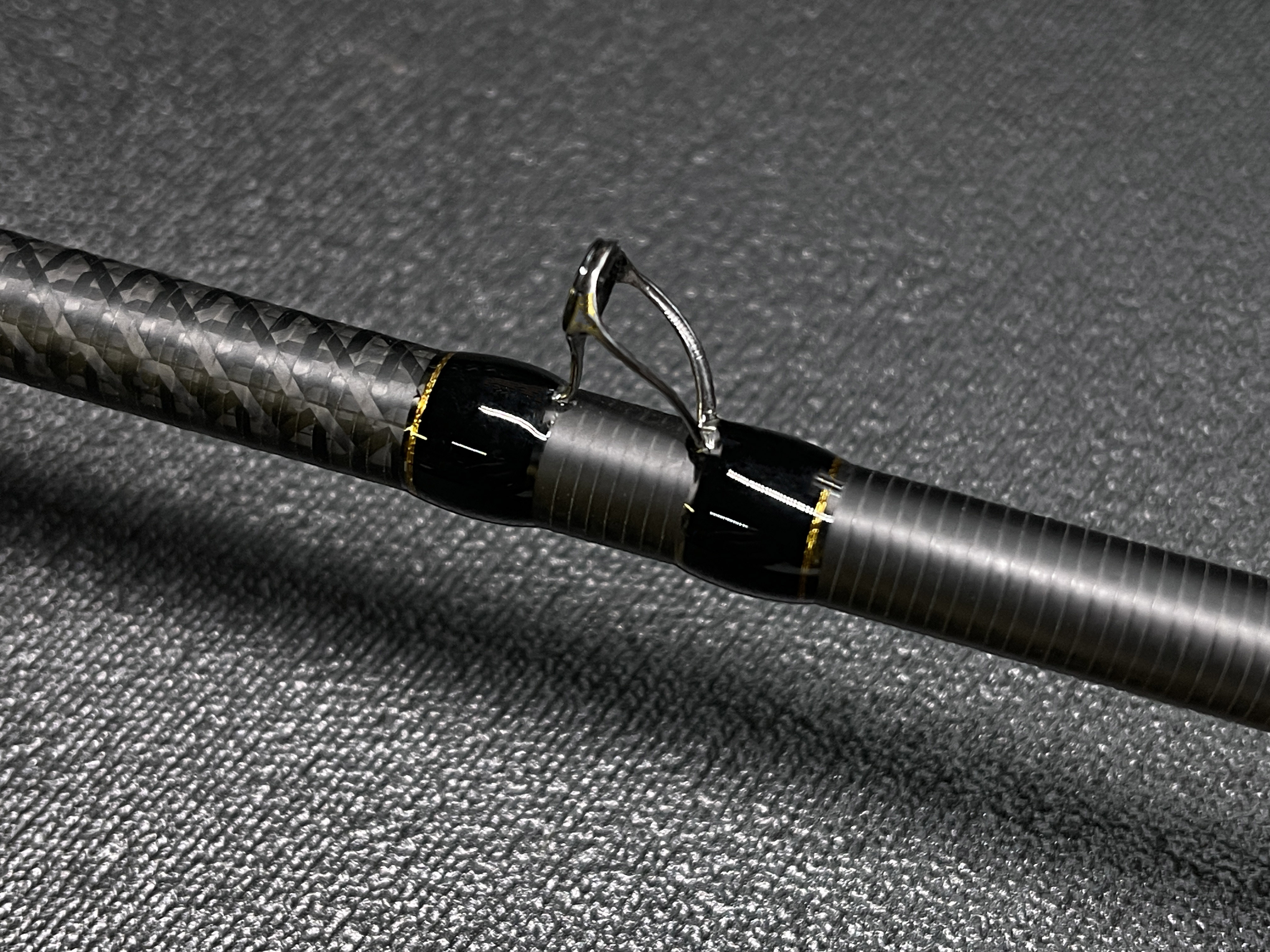
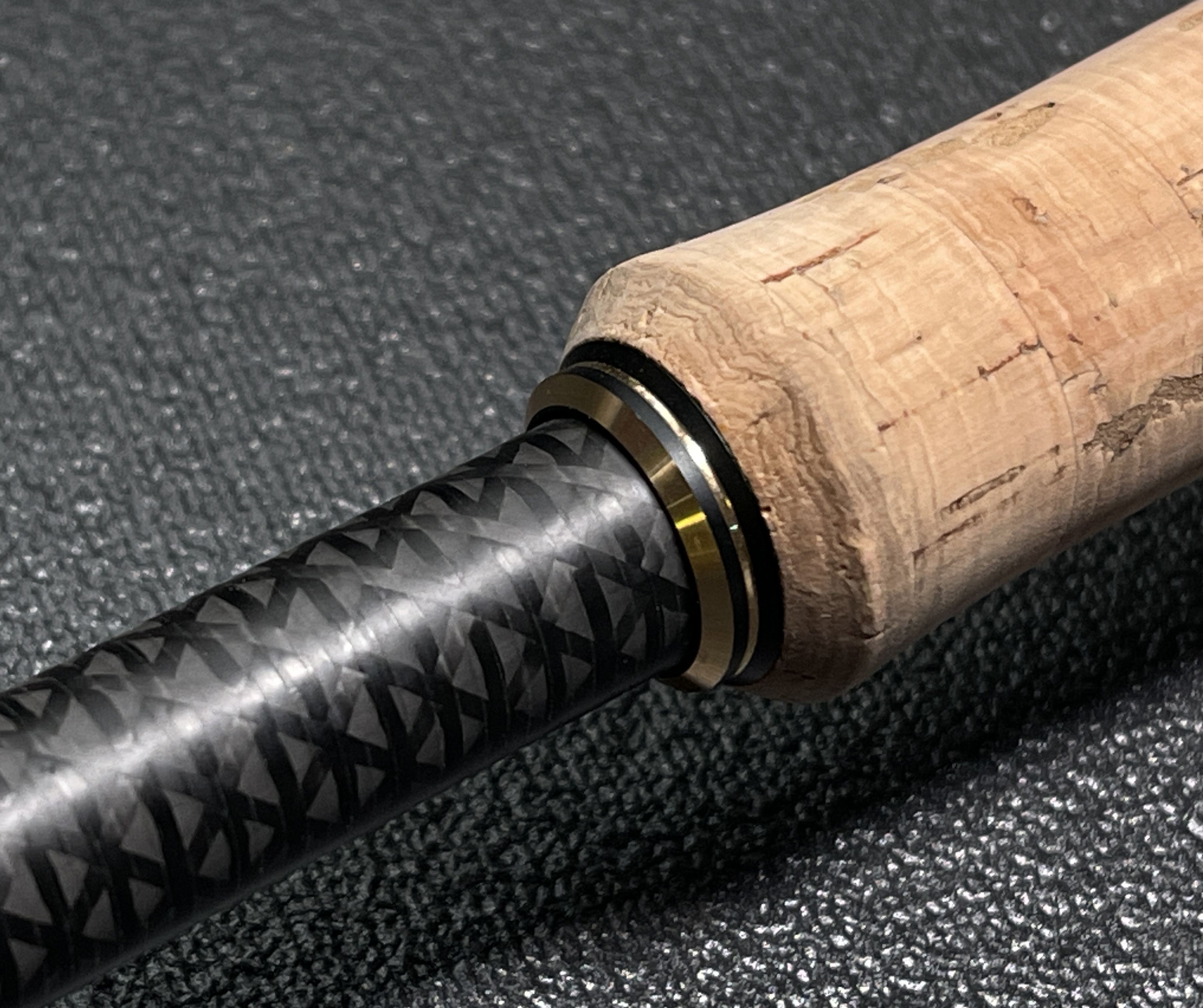
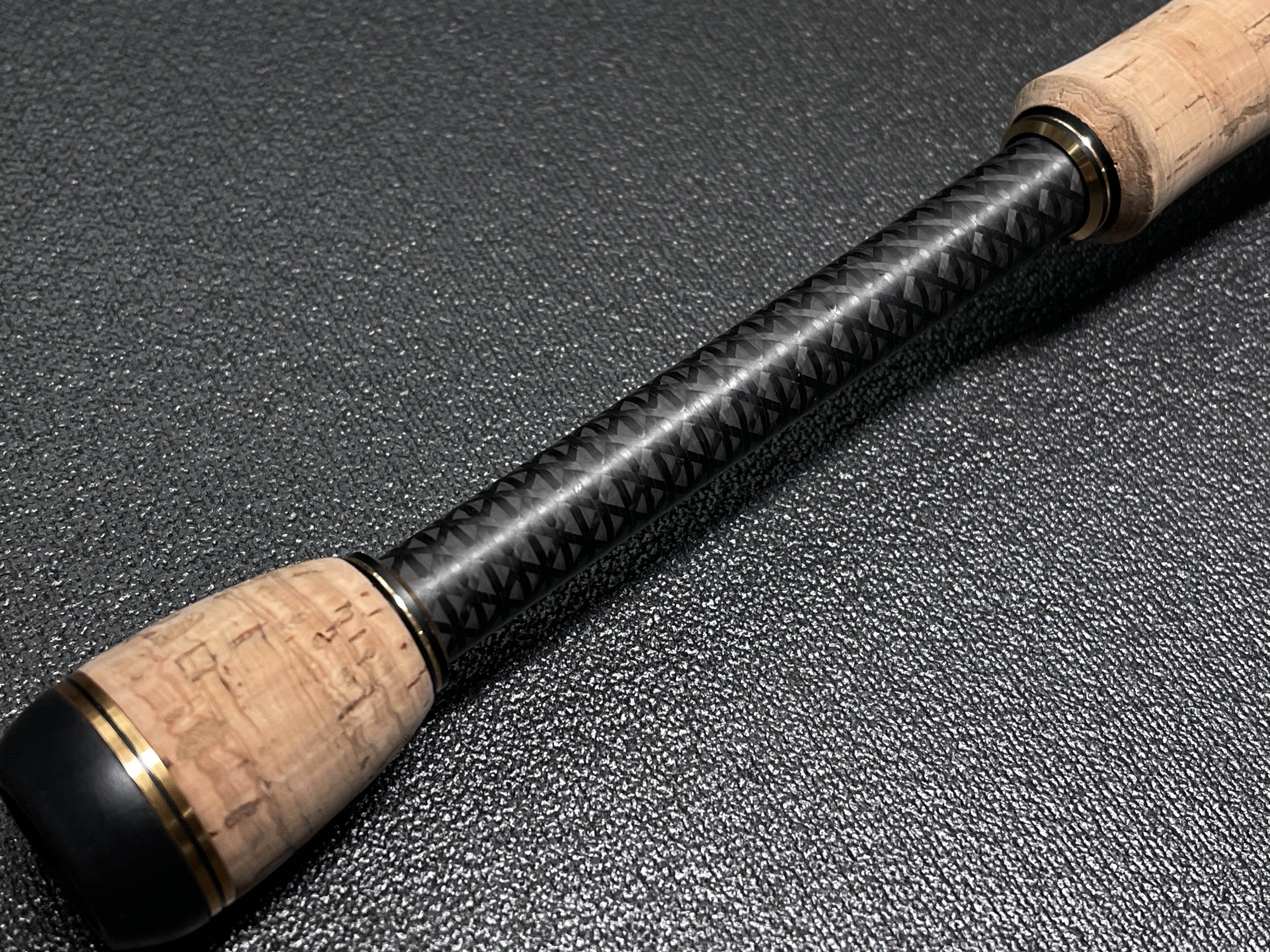
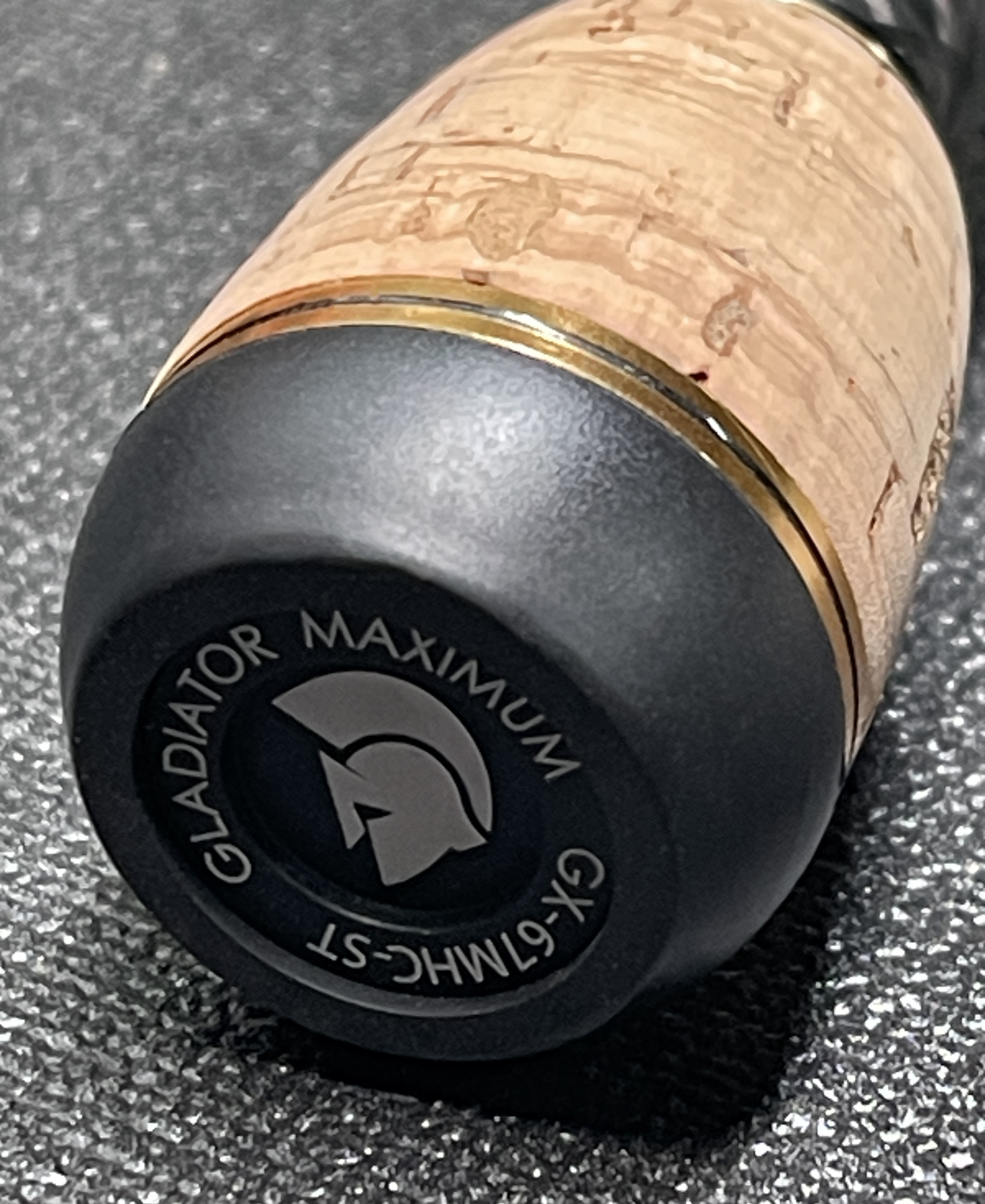
The “downside” to this rod?…Like too many things these days, these blanks are designed/engineered in Japan, but ultimately, MIC (Made In China). Discouraging?…a little bit, yeah. I’m a picky b*tch, so I always search out MIJ (made in Japan) tackle, but we have to admit, the Chinese have been stepping up their game in terms of manufacturing certain products, for some years now. I am admittedly a big fan of some other Chinese-produced blanks, including the ones used in the Tiemco Fenwick builds, so there’s that. As tough as it may be to say, we are at a point where not ALL MIC blanks/products are garbage. These rods have proven to be a good example of that.

After mulling over all the details of the build, my hand reached for that top guide to check taper and I was quite surprised at just how fast the taper was. It reminded me very much of the legendary Megabass Hedgehog Casting rod tapers…This is a TRUE X-fast that shuts down quickly! Often, these tapers can prove challenging for some anglers when it comes to casting, as you usually need to adjust release time(s) to compensate for the lack of loading abilities. At that point…it was to the Taper Tester this rod went.
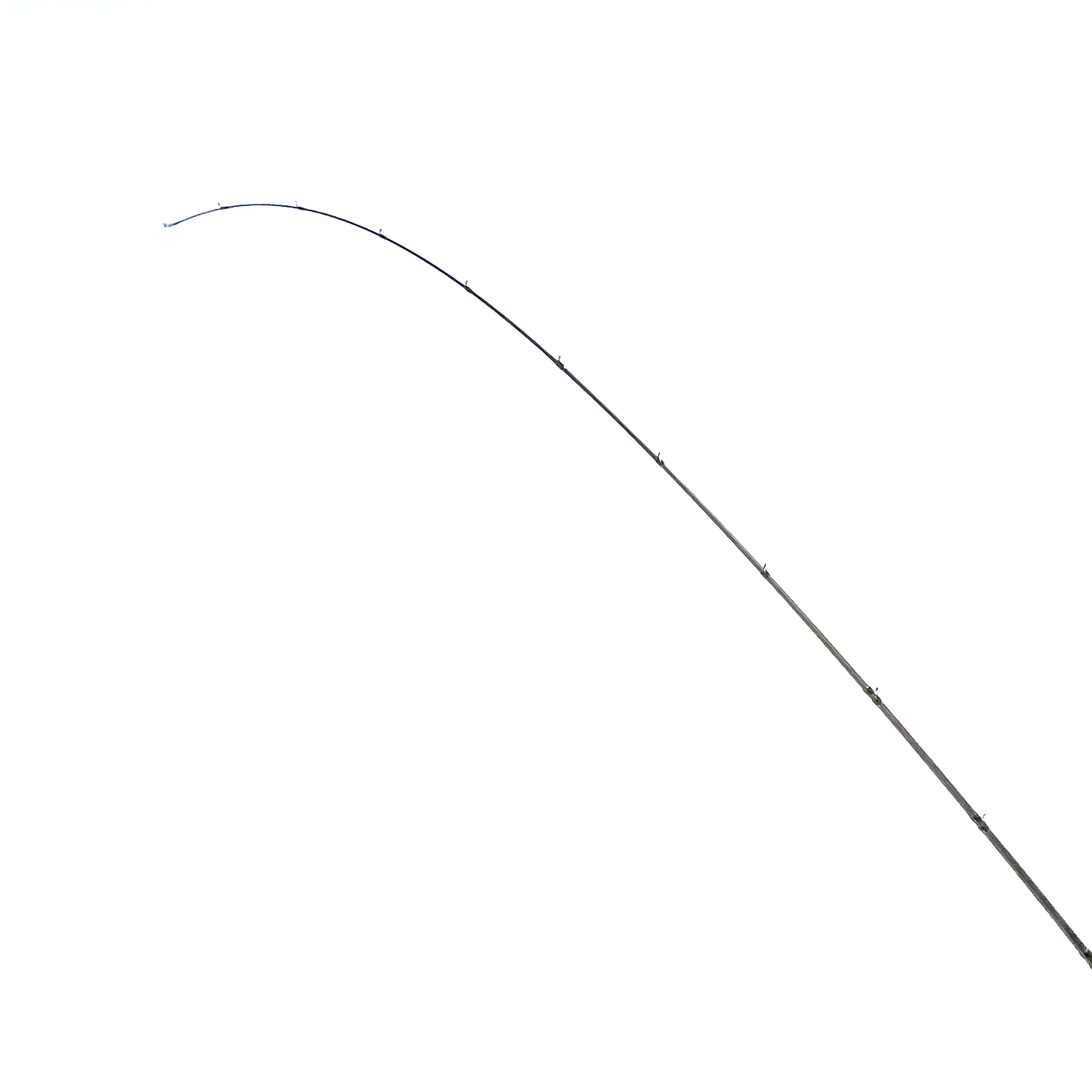
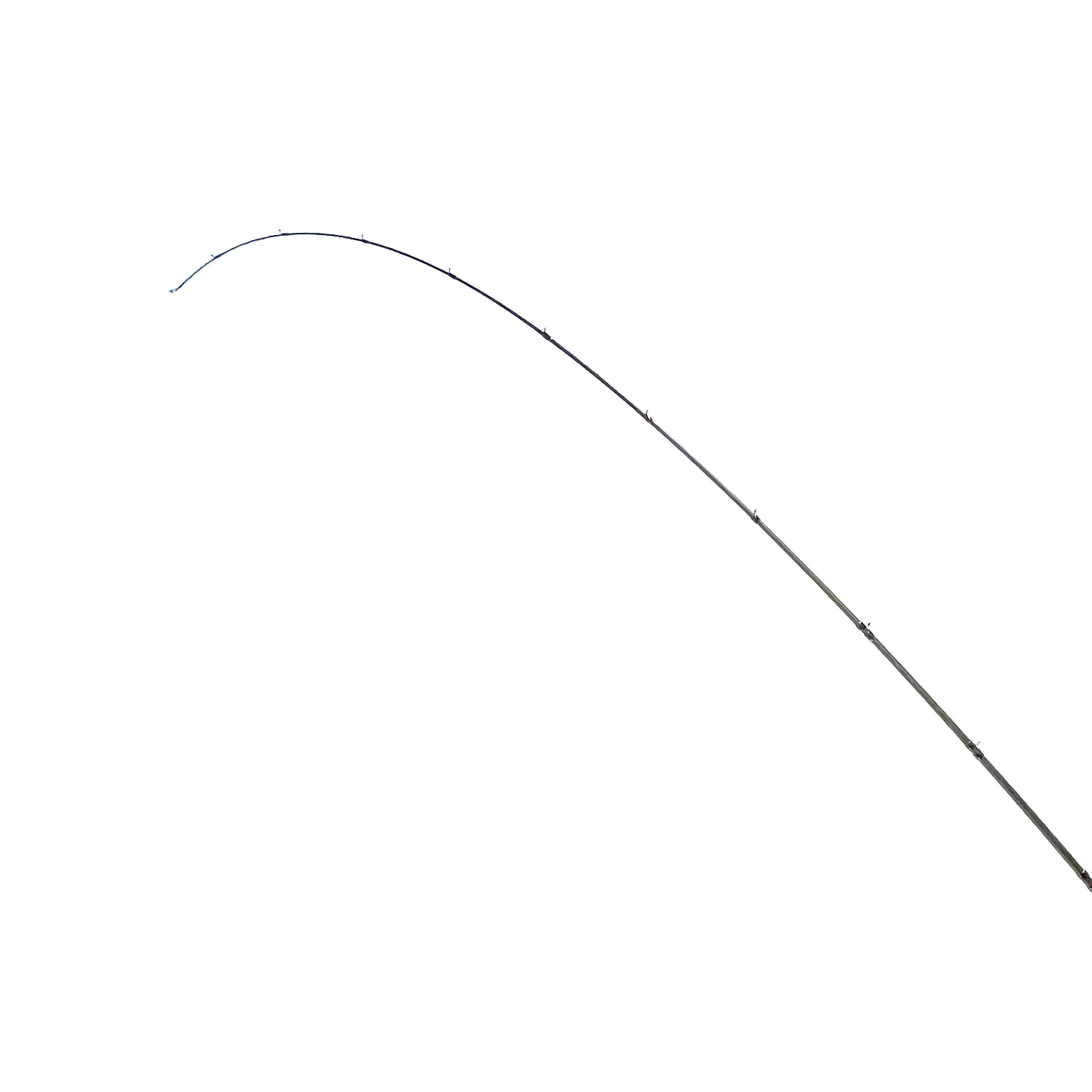
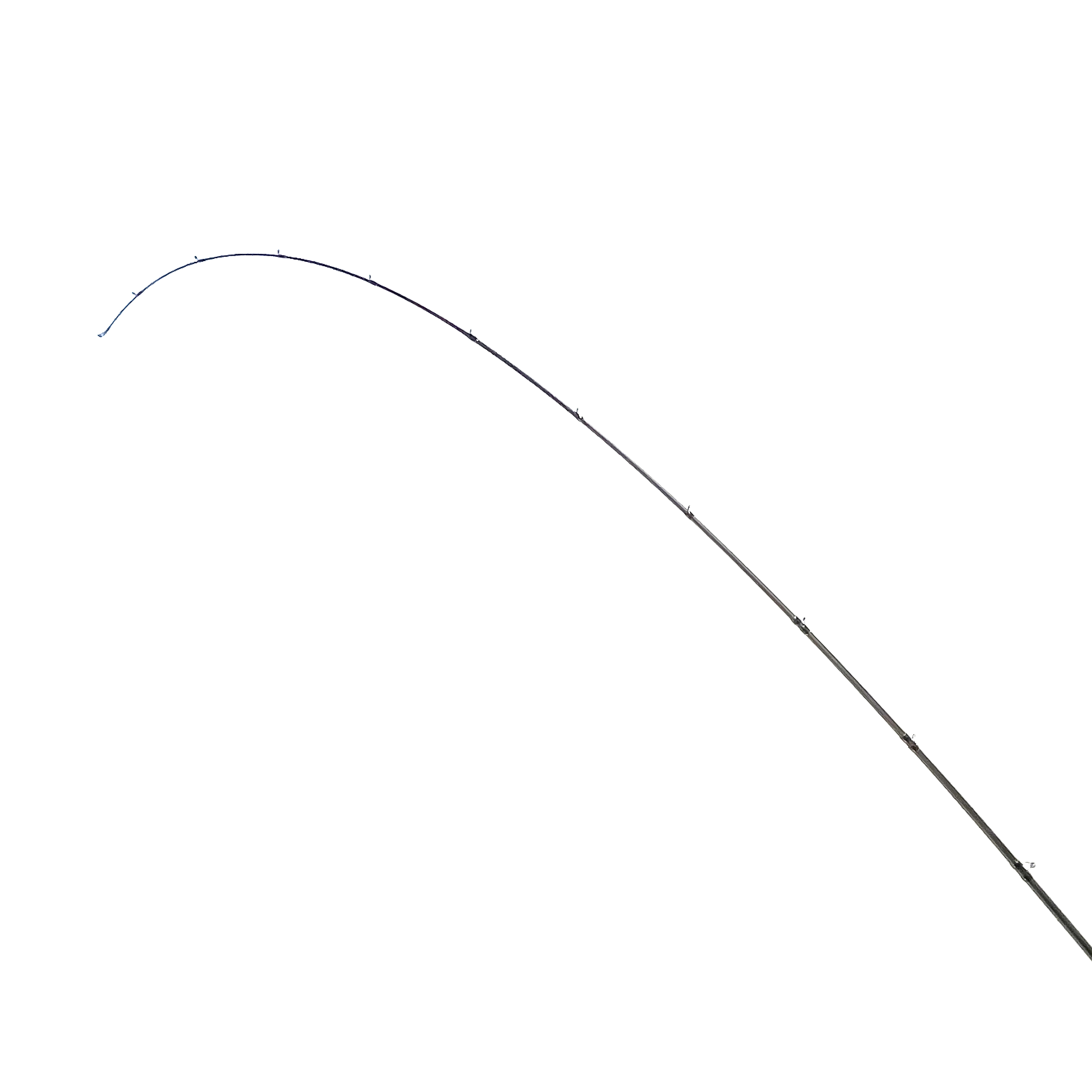
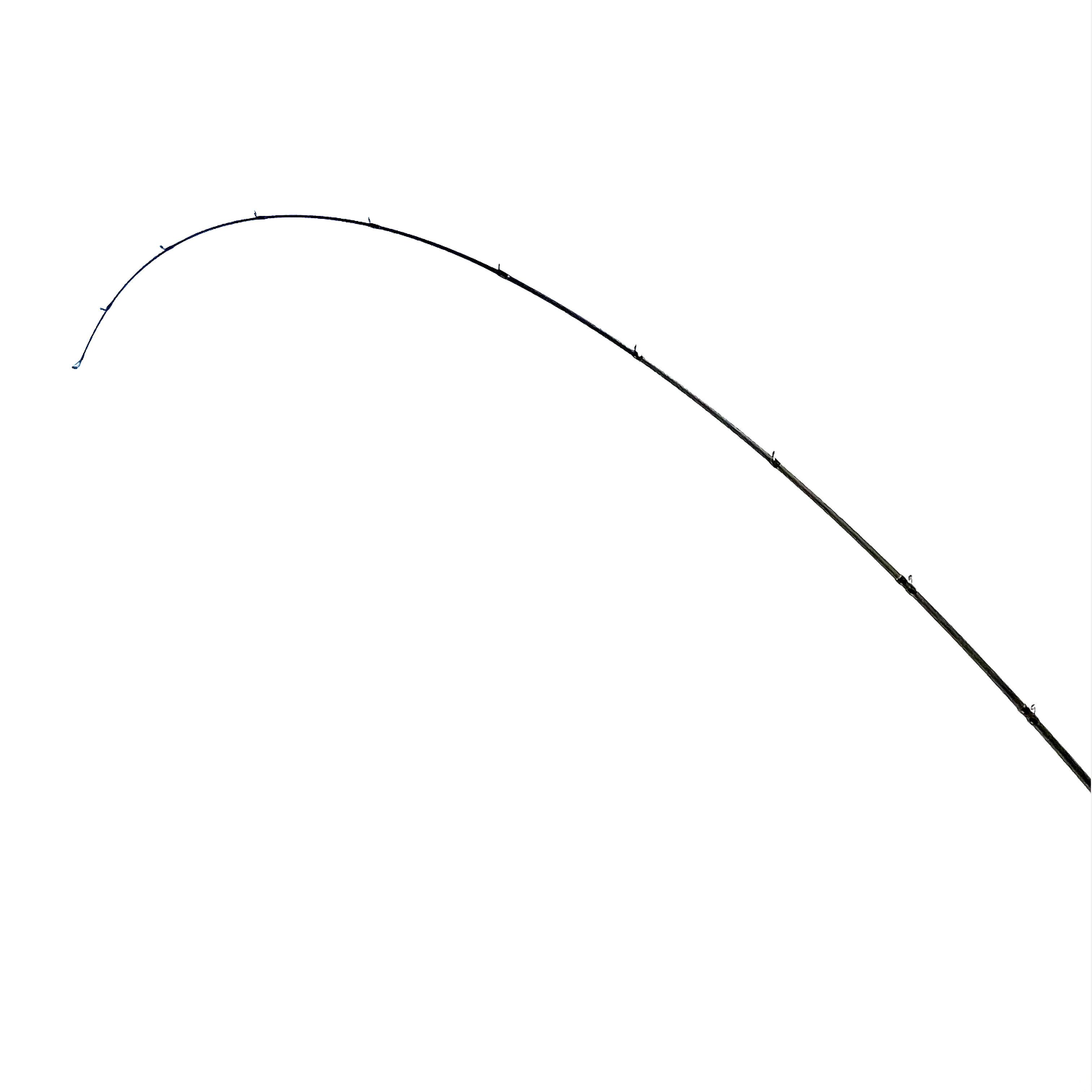
The Taper Tester shows that true X-fast taper in action. But don’t let that quick transition into backbone scare you away.
ON THE WATER
Before we dive int this section, I have to admit, The Bishop sat on the rack for quite some time before being brought into active duty. Since then, it has been in my hands for the last 2+ years. It has been fished at lakes with reputations darker than a possessed 40lb catfish’s soul, tested with numerous techniques and in countless situations. So let’s hear the truth about this stick with its cute churchy name.
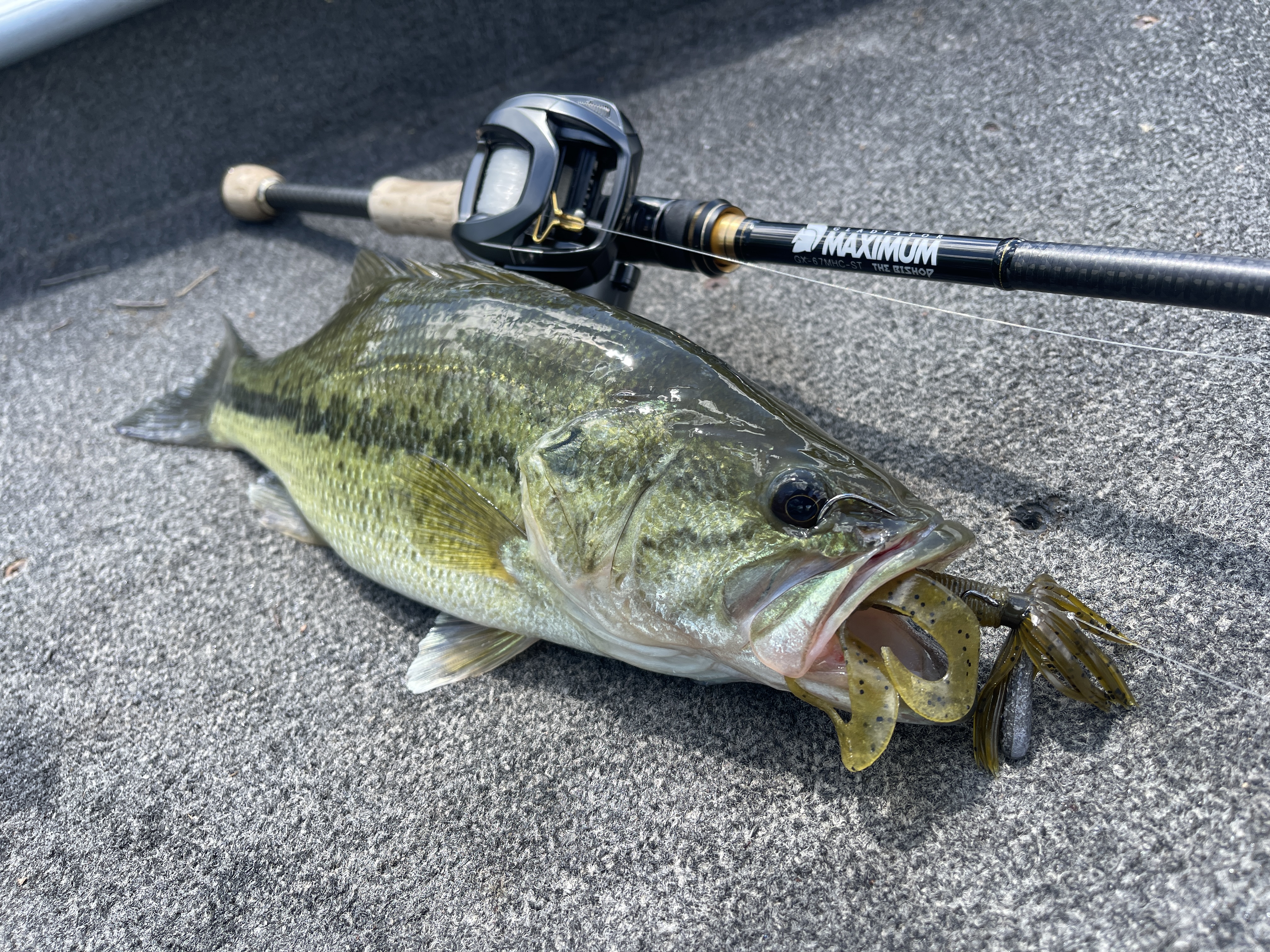
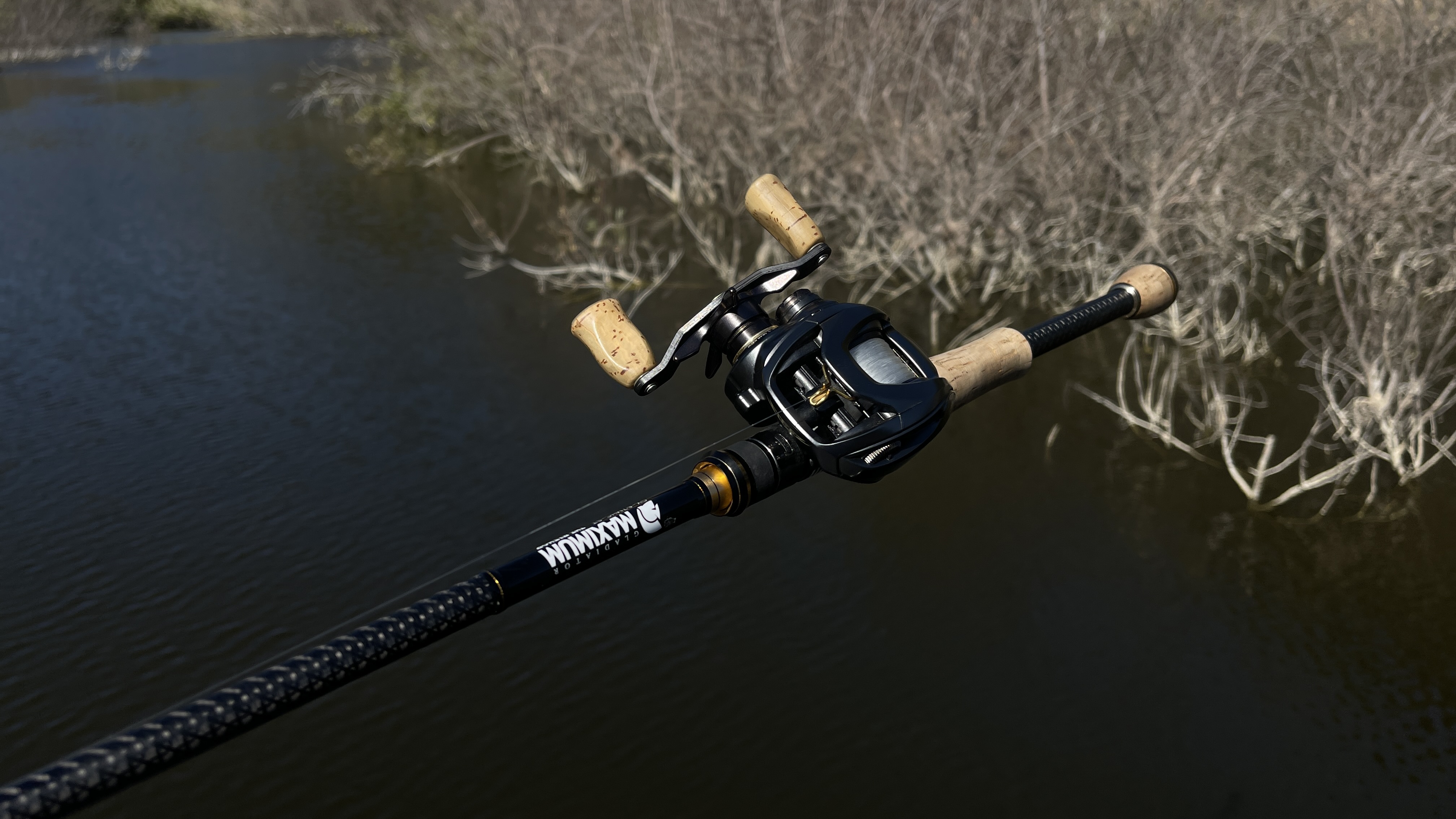
It’s late Fall and it’s the kind of morning where the fog rolls off the lake like ghost breath. I’m on a coastal California reservoir where the fish are smarter than most people on Reddit and more selective than my Ex. The combo in hand consists of The Bishop, A heavily modded Steez SV-TW H, 12lb Sniper FC and a 1/4oz 3/0 Decoy Zero Dan sporting a 5″ Hula Grub.
I pull up to the first spot on this calm, cool morning, unstrap The Bishop and get to it. The rod loads up as I start making roll-casts into pockets and just like that, I realize the tip section of The Bishop is a thing of cruel beauty. Admittedly, I had purposely made zero test casts with this rod before bringing it out on the water and honestly, I was convinced that extra fast taper would have me adjusting my release time. Boy, was I wrong and boy, was I happy to be wrong. That 1/4oz Gika/Hula rig loaded The bishop up very nicely, and it wasn’t long before I was slinging it with great accuracy at those small targets along the brushy shoreline.
Additionally, at 6’7″, I was able to quickly start pitching with it like a champ and it didn’t take long to realize the tip section was something special. Of note, the The Bishop is rated as a MH-powered stick, but with a 1/2 oz upper limit? Yeah, this is unique a “MH” rating and while it feels like it’ll handle that 1/2oz just fine, honestly, you probably won’t need this rod for more than that. Why?…because the rod actually fishes much more like a M+ with a ML tip section. I bring it up because this is another example of how manufacturers can and do rate their rods based on their own opinions. There is no standardized rating system for power, unfortunately.
Back to that tip section…
After about an hour, it was quite clear that this rod had some specialized skills. The tip section is soft enough to let you finesse a bait through some gnarly submerged brush without instantly getting hung up and on the flip side, it is also just crisp enough to pop a creature bait over the top of a branch or rock pile like a warning shot. We all know the old school Hula Grub is far from streamline, making it a bit tougher to work through brush, but The Bishop showed me that it was going to make things much easier.
Sensitivity…it immediately jumped out at me. I was very impressed, especially because I honestly wasn’t expecting this much much from the Chinese-made blank. It was also surprisingly responsive and what it was telegraphing came through crisp and clear. You will not be left feeling underwhelmed, I promise you that.
It’s that rare combination of sensitivity and function that allows you to guide some Texas-rigged plastic through tangled hardwood or chunk rock without sacrificing feel or control. Every branch, every subtle deflection, was getting telegraphed straight to my hand—letting me know exactly when to pop it free and when it was time to pause. It was almost like having underwater vision, but instead of seeing it all, you’re clearly feeling everything that’s going on. This made fishing in and around structure and/or cover less of a guessing game and more of a negotiation—with The Bishop as a translator.
After some quality time playing footsie with the partially submerged brush along the rocky shoreline, that first tap lit up the morning and shot straight into my grubby paws. Reel down, swing hard and the bishop pretty much stopped 1/3-1/2 of the way into my hook-set. I mean it shut down quickly and literally ripped that first fish out of the cover, as it made one feeble attempt to get the upper hand. First though?… “I like that”. and after a quick, acrobatic fight, that smaller specimen was soon in the boat. With that, I chose to stay dedicated to the Gika all day, as those initial casts and that first fish really showed me a lot, genuinely making that rig a ton of fun to fish. There was plenty of largies and smallies ranging from 1.5 to 3.5 lbs caught and even though there was nothing big put in the boat, it was a revealing and great first run.
A few months later, into Winter, I found myself at a favorite SoCal reservoir known for its quality-sized fish. It’s a place close to my heart that can treat you real well, but can also send seasoned anglers into therapy. With The Bishop in hand (even though I was honestly slightly concerned about being outgunned) I settled into a game plan. Fish deeper water (up-hill), picking apart rocky points, slowly working soft plastics and jigs through whatever it took.
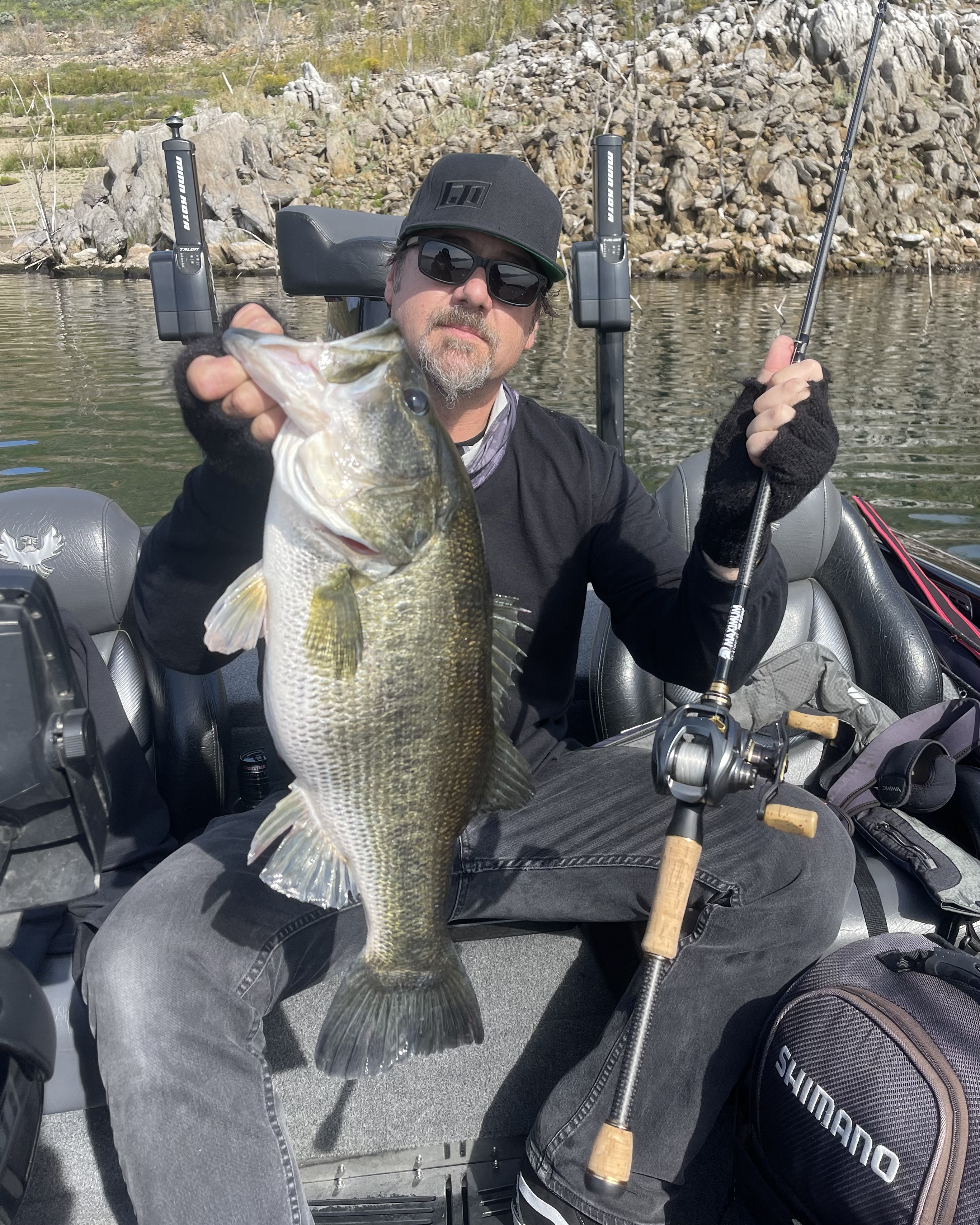
To say things “went well” from a testing standpoint is an understatement. Time after time, in up to 35 feet of water, The Bishop tiptoed baits across jagged rock edges/piles making sure it painted a clear pic of what was happening below. It let me finesse my offerings through underwater branches like I was threading a needle. Throughout the the day, it was that uncanny balance of finesse and control that stood out most. I connected with a solid number of fish in the 3 to 5 pound range—each one yanked from rock piles and even a few from somewhat dense deep water brush that would’ve had many other rods in this class sweating like a crackhead in a police station. That said, The Bishop was continuing to impress me.
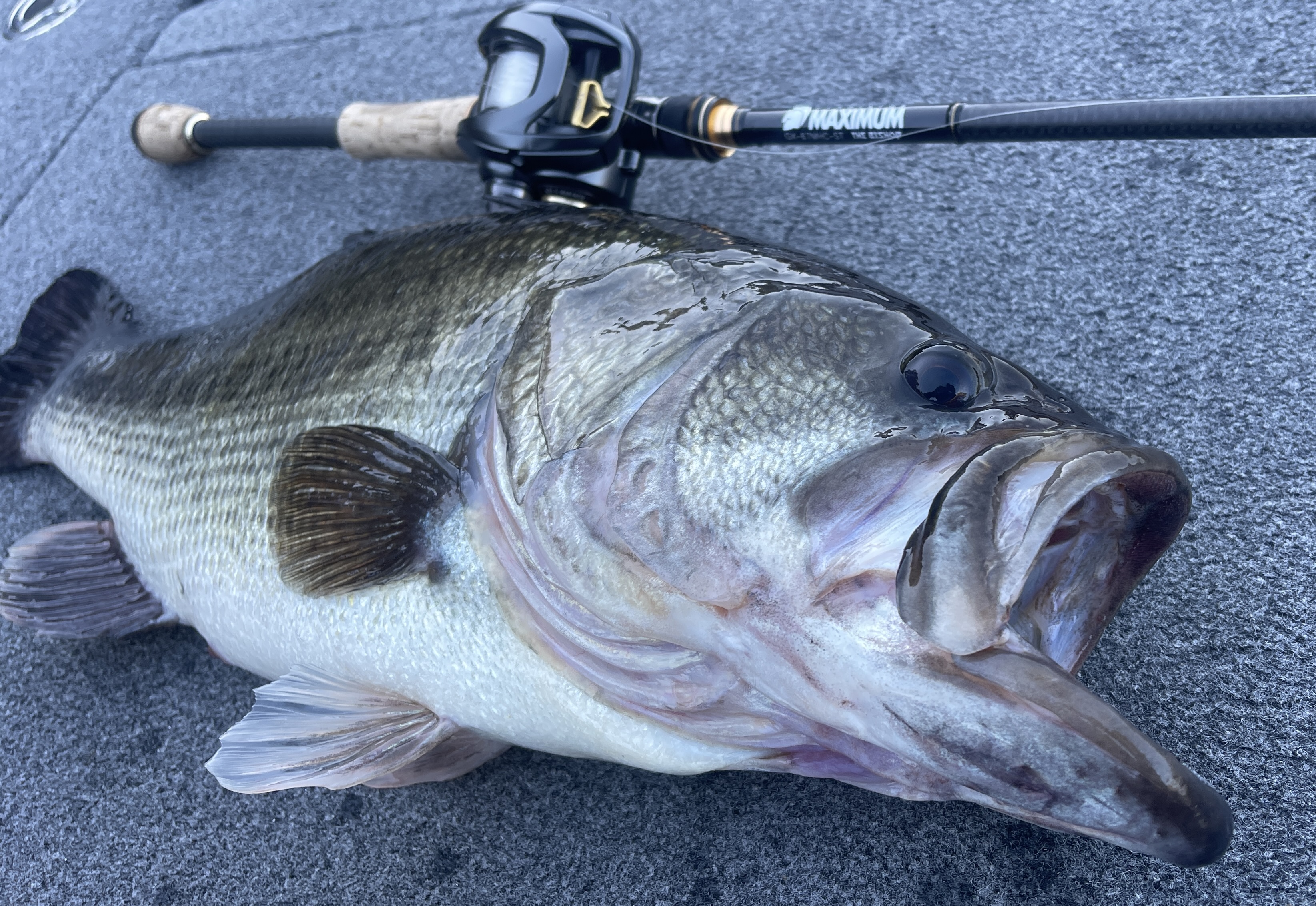
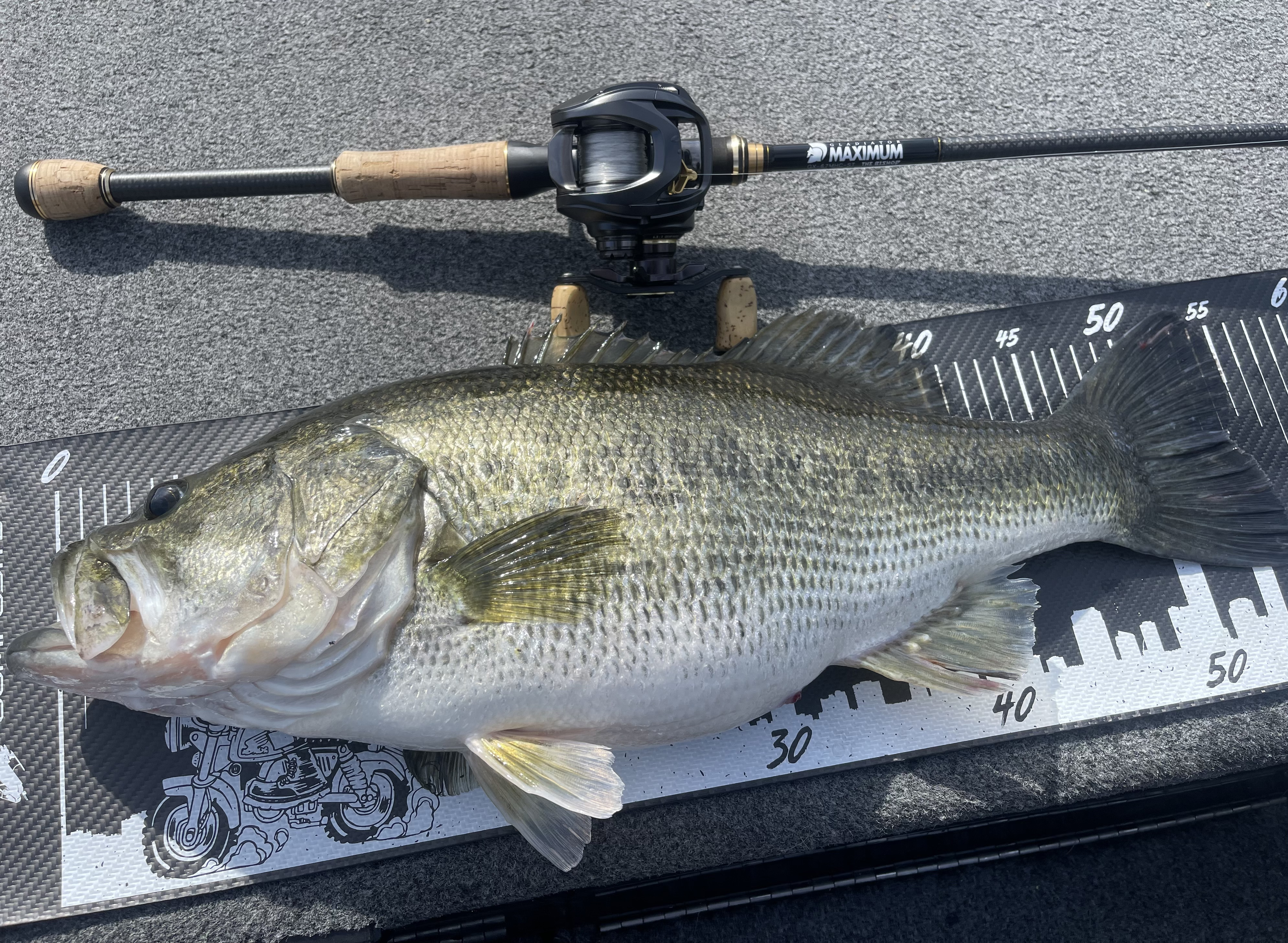
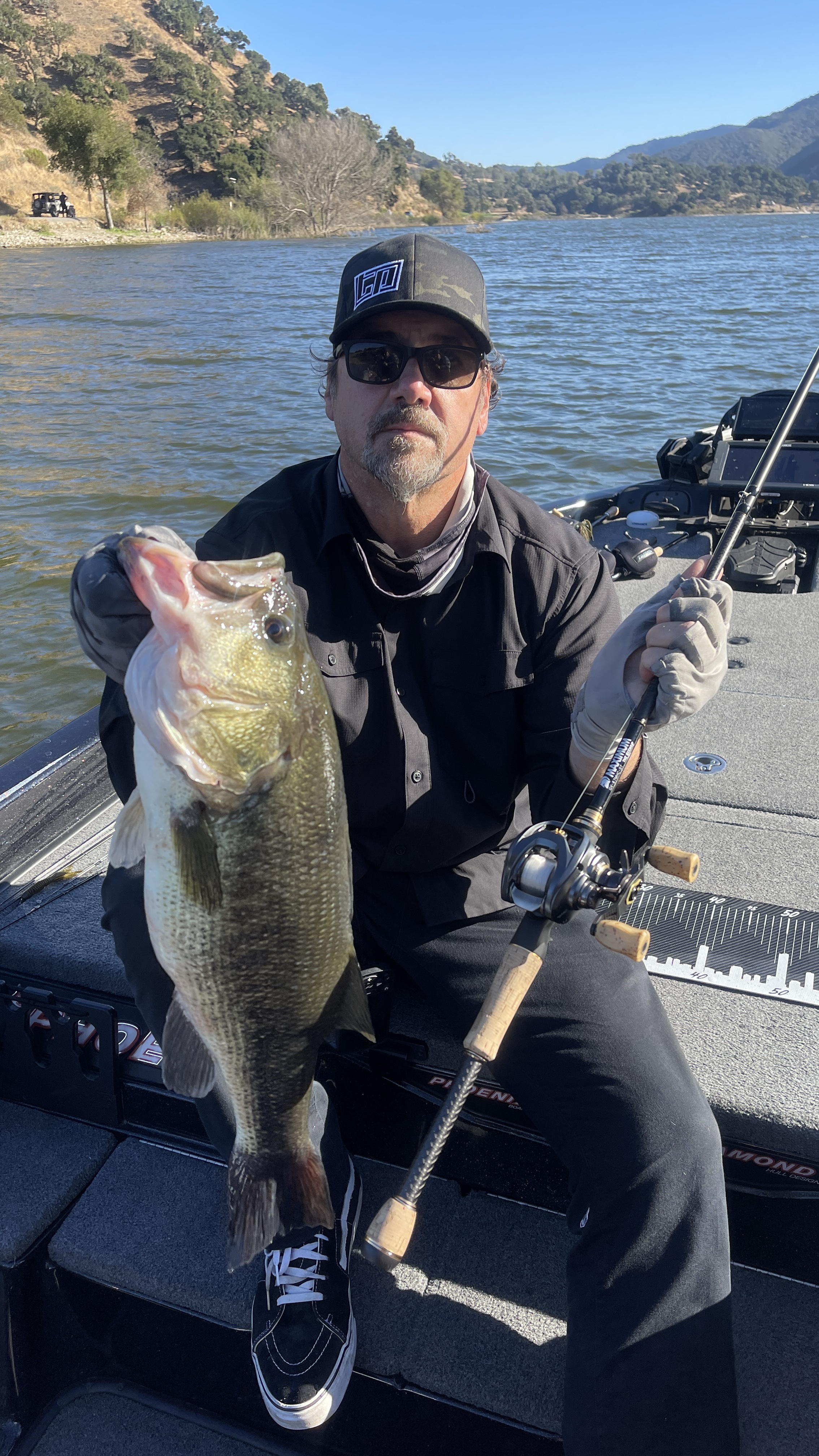
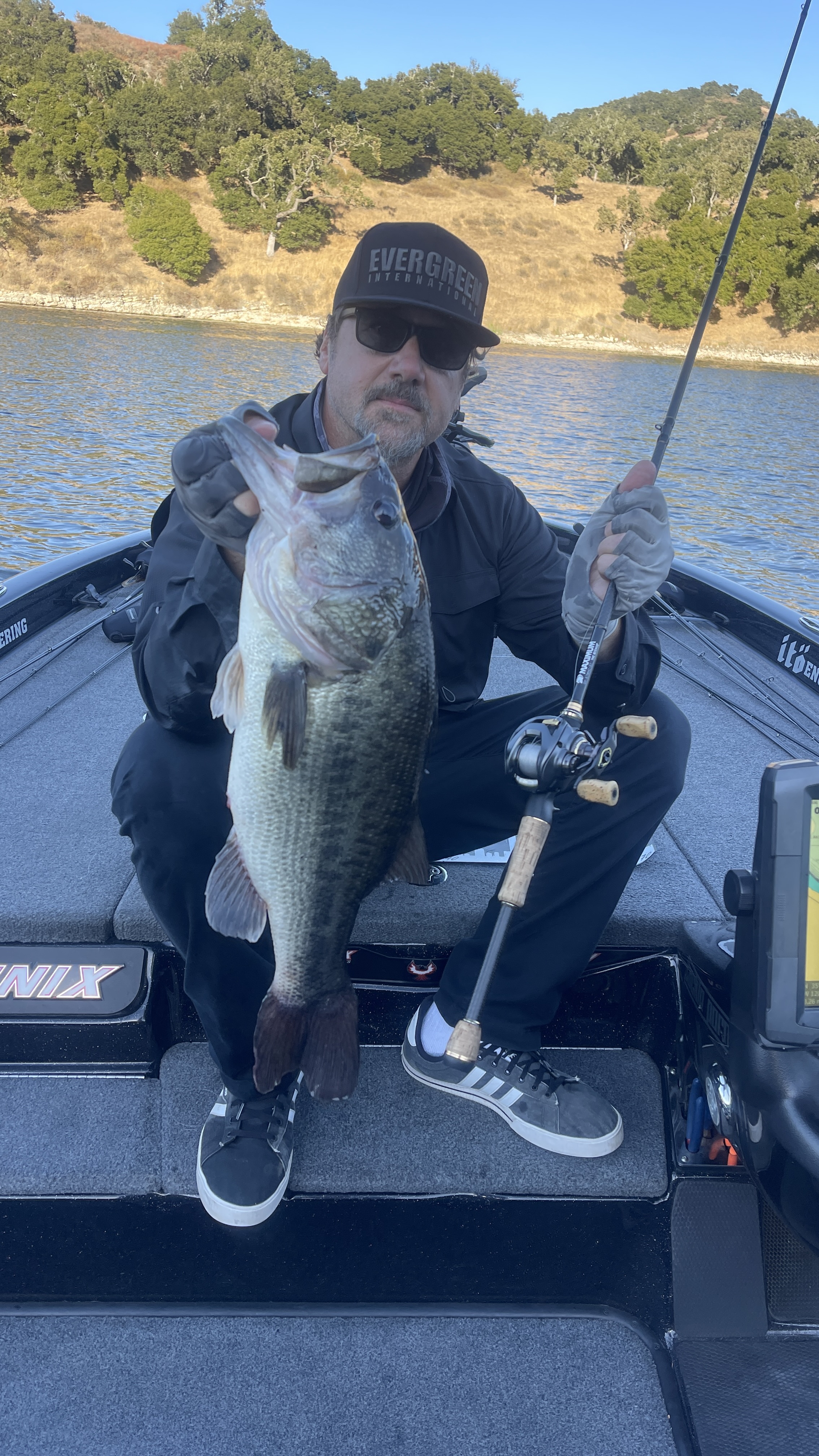
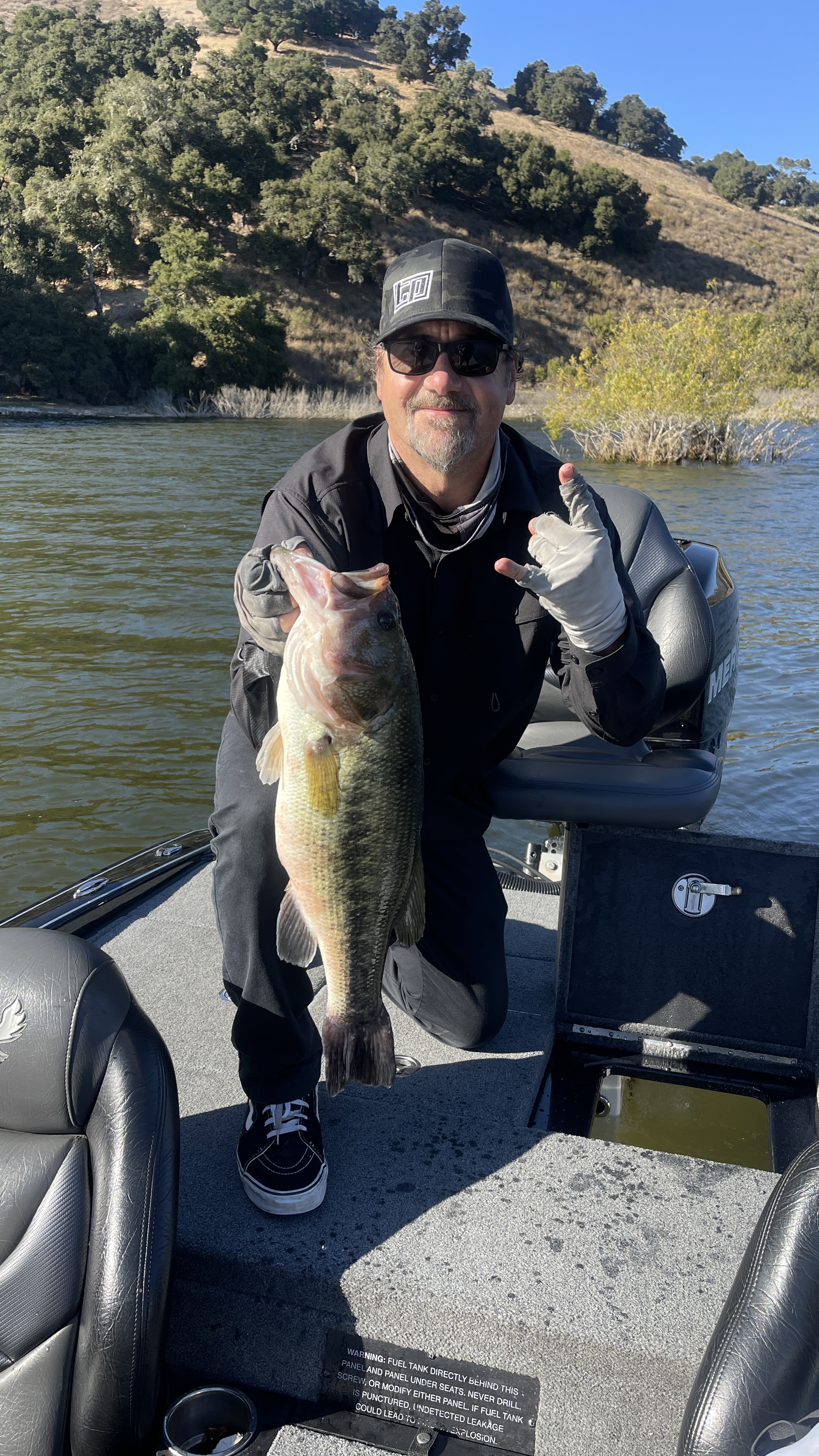
The day wore on and the wind, which had been steadily building, cranked up to “mildly apocalyptic.” Casting into winds like this can often feel like trying to throw a paper airplane through a leaf blower, but time after time, it loaded up and got the job done nicely. As I was working along a sloped ledge varying in depth from 15-25 feet of water—right where the structure started to get real chunky, was when it happened. The Bishop transmitted the slightest of taps and just went heavy. No big “thump”…just the unmistakable spongey weight of something big and nasty. I reeled down as I slightly extended my arms outwards- pointing that rod tip at the water, swung hard, and The Bishop lit up like a lie detector at OJ’s trial. What followed was a drag-peeling, heart-rate-spiking brawl that felt longer than most of my relationships. When it was nearly over, a thick 7+ -pound piggy surfaced, flipping water and middle fins in every direction, but The Bishop steered her right into my cold tired hand. As I lipped her and lifted the healthy fish in triumph…”What a blast”, was all I could think to myself…it never gets old.
So…was The Bishop stressed a bit during the fight? Not gonna lie…Yes, but it was also able to effectively keep that fish pinned and respectfully turn its head when needed. While it was a bit tested, it also made for one of my favorite catches of the year. This one was a huge confidence builder in the rod, while also being just one more event that would help solidify my appreciation for this stick’s capabilities. Even with a tip section that is soft enough to give a bait a heartbeat, this stick is armed with plenty enough backbone to make fish regret their life choices once a hook-set was initiated.
In moderate-to-heavy cover, across sharp, unforgiving structure, and even in strong wind, The Bishop mixed finesse and power very well.
Fast forward past many successful outings with The Bishop, to another day at that coastal lake. Again, in the fall, almost a year later. Another quiet foggy morning filled with some quality fish, burned off and was replaced by a rising wind that refused to blow in just one direction—just the kind of infuriating crosswind that often turns slack line management into a full-time job. Detecting bites in that kind of “breeze” can be a nightmare. Subtle pickups tend to vanish, and everything can start to feel like you’re dragging your bait through a wind tunnel full of mud. But The Bishop?…It refused to be silenced. Even in the gusty chaos, it continued to transmit the important stuff—those delicate thumps were a bit more difficult to detect, but they were still well-defined. It registered those pressure changes, and “tap-tap” hesitations cleanly. Its characteristics such as those that separate this caliber of rod from most of the overhyped ones you’ll find at big box stores and even some that cost much, much more than The Bishop. Countless fish were taken in those tough conditions, ranging from scrappy one-pounders to a few freight trains that reminded me of why I don’t fish with spinning gear unless I’m emotionally compromised. The tip didn’t just survive the wind—it almost weaponized it, allowing me to continue imparting action, detect changes in structure/cover and stay responsive enough to convert most of those faint bites into full send positive hook-sets/landed fish. In conditions where lesser rods go numb, The Bishop still whispered through the line—sarcastically, of course…. “Oh, you didn’t feel that bite? That’s cute.”
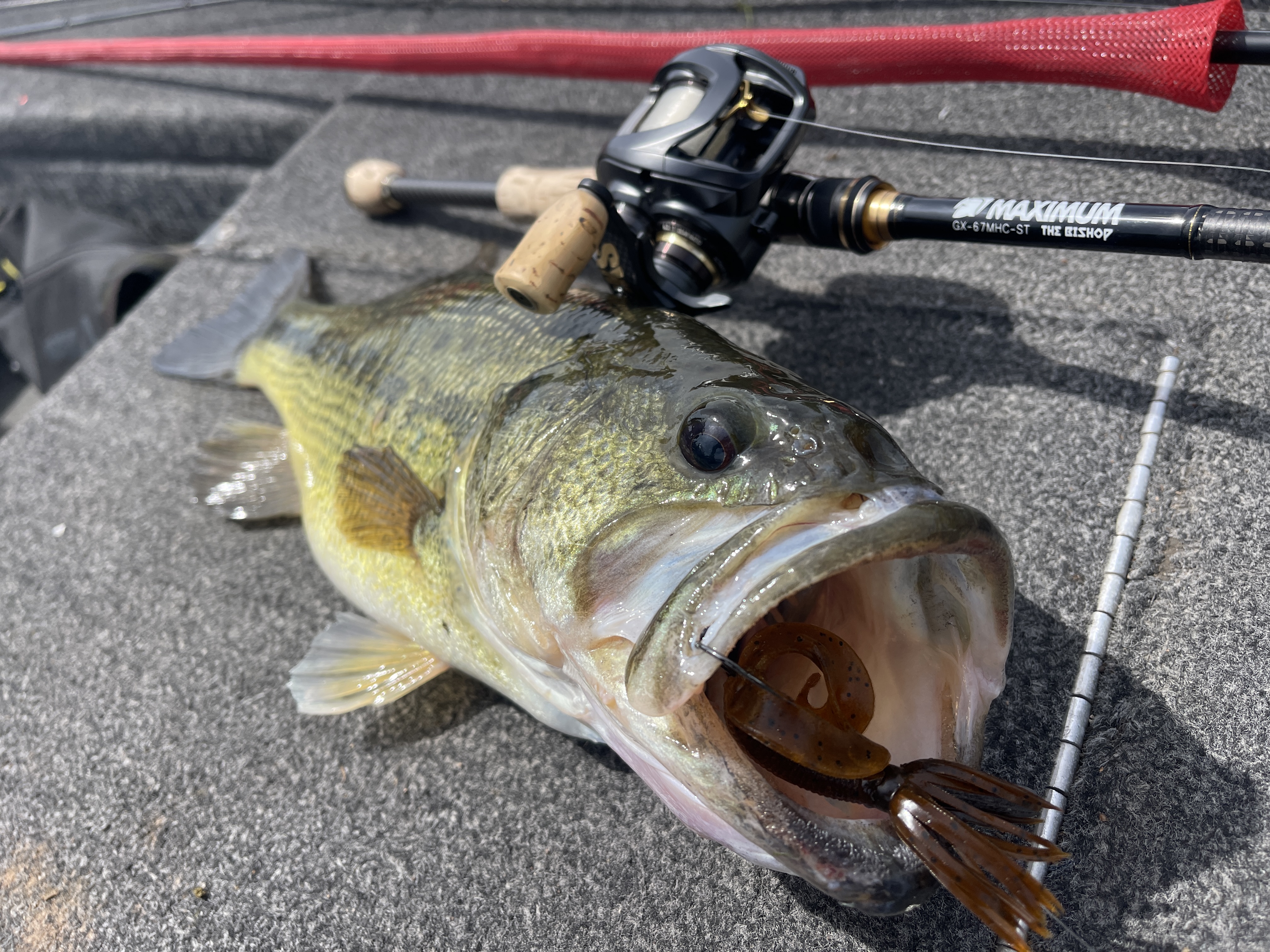
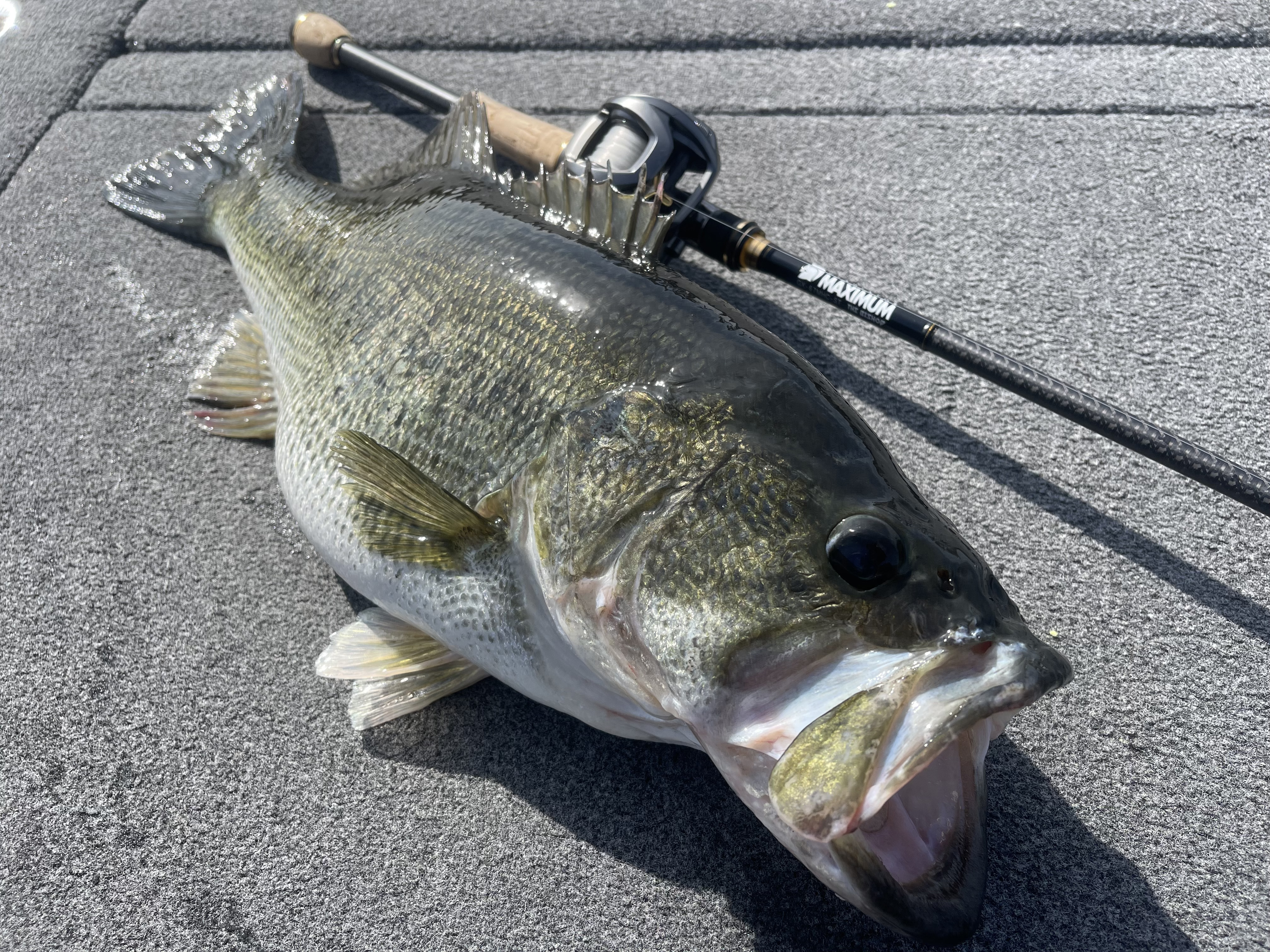
Towards the end of the day, I pulled into a heavily stained, wind-blown shallow cove with a lone pair of small bushes sticking up in the middle of it. Armed with a 3/16oz Tokyo Rig and a 3″ DoLive Craw, I pitched the rig to the backside of the cover and pulled off some line to let it fall as straight down as possible. Before I could engage the reel, I felt a “pop”, and watched my line take off. I immediately engaged the Steez and swung hard. Once again, the 6’7″ rod, now nicknamed “The Velvet Hammer”, was stopped short in its tracks as that hook-set hit hard. Sure enough, that fish headed straight back towards the trees, but I had other plans. I stood my ground, back arched in the opposite direction and turned that fish around with authority. A few moments later, the 6.6 lb greenie was on board for a quick photo shoot. Yet another testament to this rod’s sensitivity and backbone power.
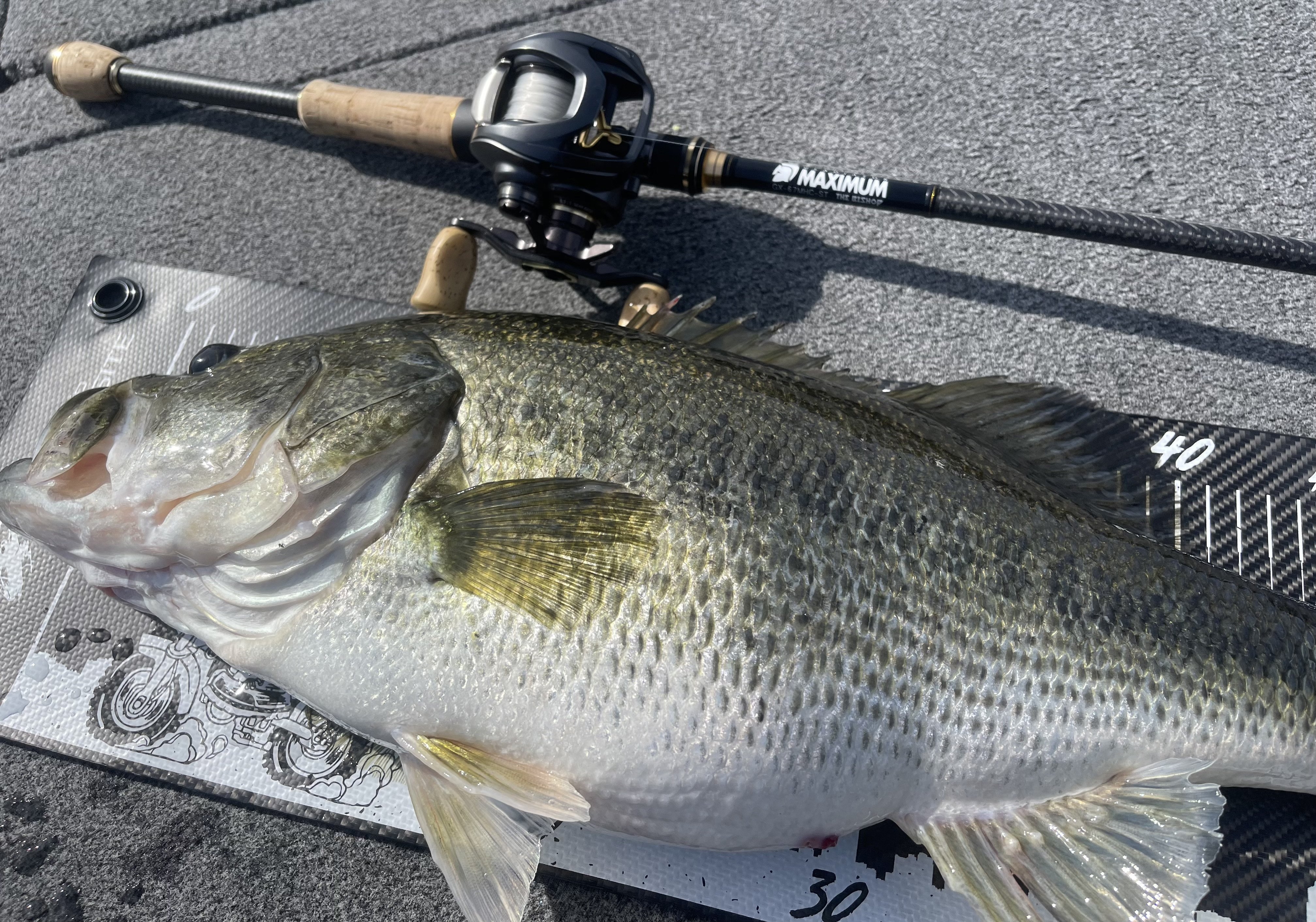
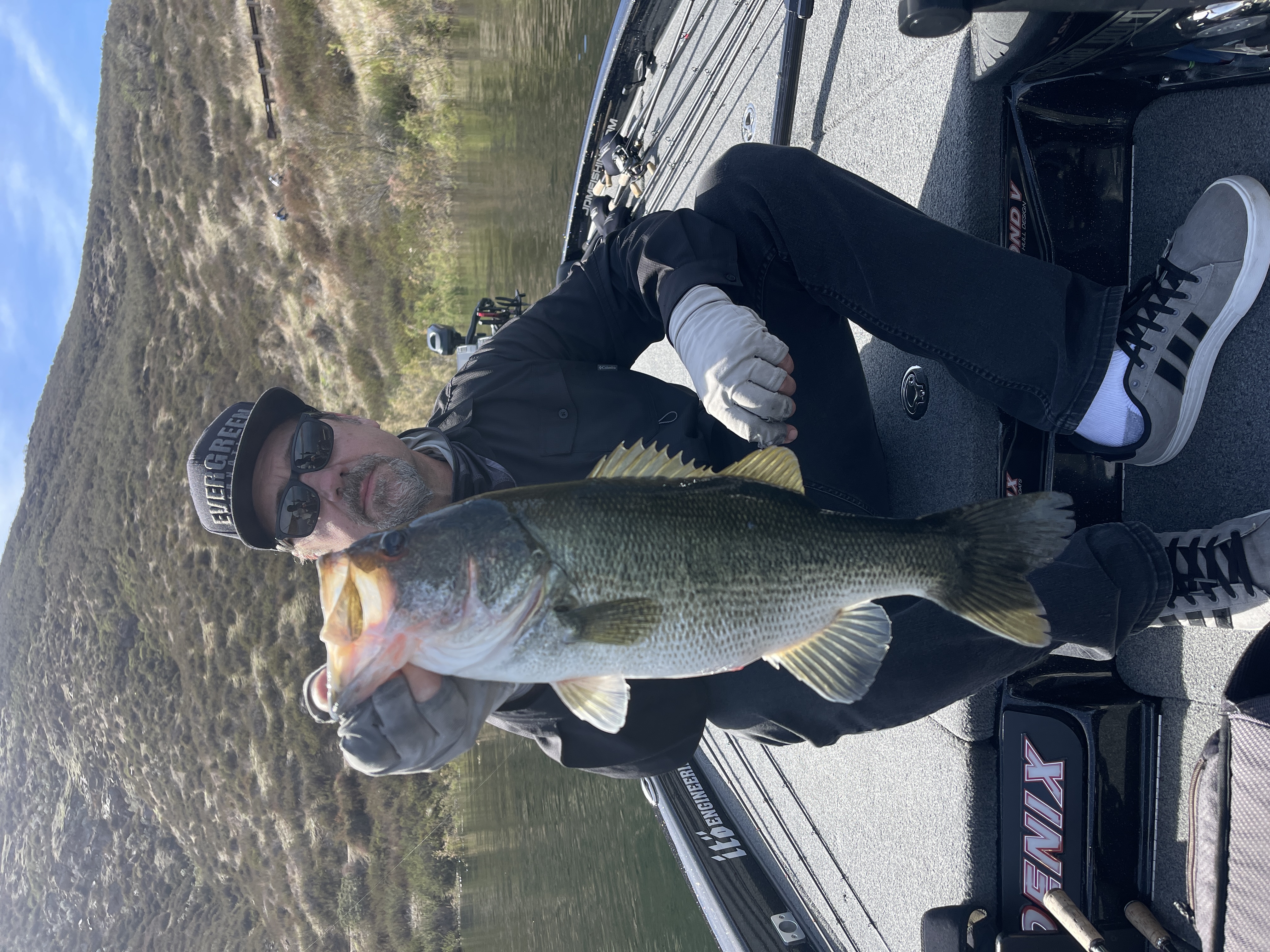
The following weekend at that same lake, the sun began to set and that infamous line – “3 more casts” was called out to my exhausted, sunburnt girlfriend on the back of the boat. We were fishing close by the launch ramp and I roll casted the 1/4 oz Gika-rigged Reins Ring Craw into a small pocket between two small submerged bushes in about 8 feet of water. As I slowly worked that rig up to the limb my line was strung over, I felt what seemed like a rapid-fire bluegill bite, as the perp cherrypicked my offering and took off. I immediately swung and soon realized this one had shoulders and the attitude of a drunk uncle. Through the brush it took me, as my sphincter puckered, feeling my line get dragged/shredded through the branches. Once again, I leaned back hard and grunted like I was about to give myself a hernia. The Bishop arched deeper into that backbone and had plenty enough to turn that fish towards open water. I exhaled as a few half-hearted jumps and a dramatic head-shake finally ended with 7.29 pounds of pure joy being directed towards my hand. Once again, The Bishop’s tip section did its job of allowing that fish to eat the bait, while the backbone stepped in and kept it in check. That fish came boat-side with a look that said, “What the hell was that?”…
That scenario—and how the rod handled that whole situation—was the closing argument.
Since then, The Bishop has been with me on countless outings to local lakes, Northern & Southern waters, vacations in Missouri at Table Rock and Arkansas at Bull Shoals, then back to Cali where it’s seen so much action. In all honesty, at times, I’ve had to force myself to pick up other rods. It’s been that much fun.
Pros & Cons
Because nothing is perfect…
Pros: Outstanding sensitivity for bottom contact work and fishing structure, cover, etc. Fishes “longer” than its length due to X-fast taper. Tip section is nimble and purposeful. Loads up very nicely on the cast. Outstanding backbone that’s there when called upon. Lure and line ratings are more on-point than most manufacturers. Great accuracy while pitching, roll casting and overhanding. Great balance with a Steez or similar weight reel on board.
Cons: Cork has more filler than a gas station Burrito, but this is the way with most rods these days. Aesthetics are…fine? Sort of meh, but clean overall (This is just my opinion and will vary from person to person, of course). Not ideal for deep water (>35ft). Could use a hook keeper in a smart place. Being that its MIC, I feel it’s a tad overpriced at retail without JDM sourcing. Would like to see a full Torzite guide train implemented at this price.
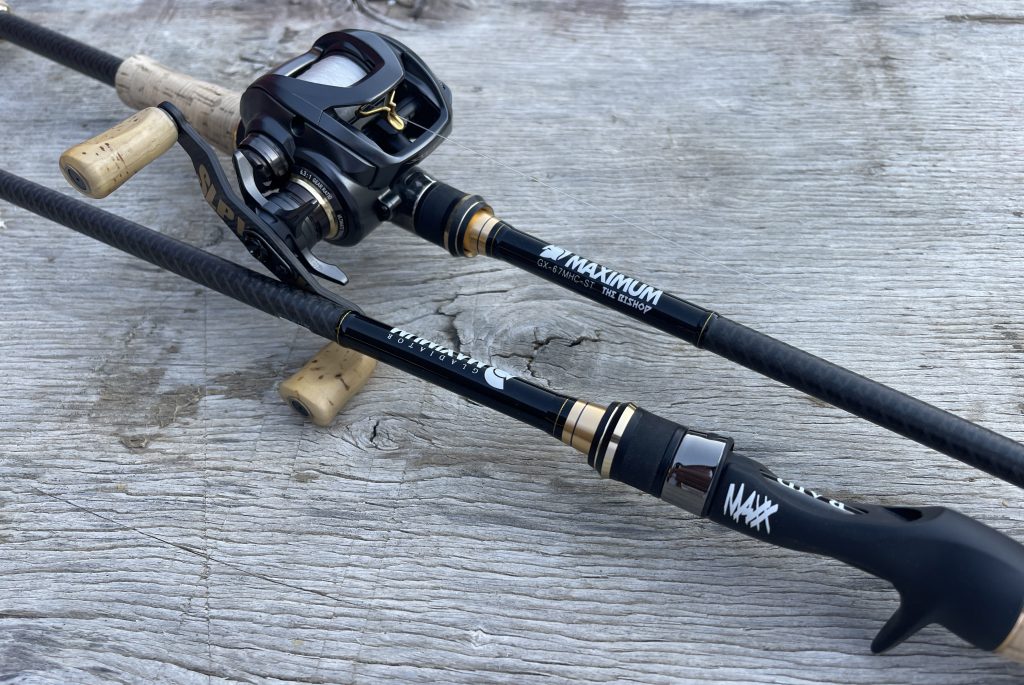
A better shot of that “MAXX” logo on the side of RAID’s reel seat.
THE VERDICT/TLDR:
The RAID Japan Maximum “The Bishop” is a fantastic rod for the dedicated bottom-contact freak who likes their soft-ish solid tips with a healthy side of backbone and their short-to-midrange range hooksets borderline violent. It brings together great casting manners, outstanding sensitivity, and a delightfully aggressive taper that makes it feel longer than it is.
The tip still loads surprisingly well when casting lighter offerings. Throwing a 1/8 (plus trailer) to 3/16oz Gika rig isn’t a game of hope and prayer. It feels calculated, often surgical. The Bishop doesn’t just tolerate finessing your baits into tight places with the confidence to steer fish out, it invites it in for a brew and then throws it out the window if you overstay your welcome.
The GX-67MHC-ST shines in the 3/16oz to 1/2oz range.
I’ve drug Texas rigs, Gikas, Tokyo’s, Nekos, finesse Jigs and free rigs through hydrilla, grass, brush and timber. I’ve crawled them all over rock piles and structure down to 30+ feet of water, but I don’t recommend pushing it much beyond 30 feet and at anything greater than midrange distances. While this rod fishes “longer”, it of course has its limits. Go past them and the accuracy of what this rod transmits obviously diminishes. It’s not that the rod folds; it just loses the telepathic connection it normally has within its boundaries. Not to mention, the power just isn’t going to be on tap past a certain point due to physical limitations.
Shallow cover? It dances through that like a ballerina with a knife.
Mid-depth structure? It telegraphs everything. That tiny leaf floating midwater that a bluegill farted on? Yup, you feel that too…Just kidding, but it’s damn good.
Hook-sets are where the Bishop reveals its dark side. It’s got that kind of instantaneous transfer of power that makes you feel like a mini Excalibur is in hand, yet, it’s got a slightly soft side that shows itself when it counts. But again, when you’re needing to horse a fish out of light to moderate cover, the rod doesn’t hesitate, it just does (as long as you stay dedicated).
Sure, IMO…it’s not going to win a beauty pageant and the cork filler might crumble into despair if you stare at it too long, but that’s not a deal-breaker in my world. This rod has a very specialized set of skills and performs at a high level within its range. It’s also about results, and for that, it earns a high score in our book…even if it is ultimately made in that other overseas place.
After a couple of years of hauling some tank largemouth out of brush, literally ripping lips off of fish (sorry-not sorry), fishing plenty of structure and coming through more trees than I can count, this stick has won my heart. I’ve even acquired a second one, if that tells you something…
Blessed be The Bishop. May all your hook-sets be righteous and your cover penetrations clean. This ain’t no Pawn.